
Mauritius offers stunning underwater adventures, but snorkeling here requires preparation to stay safe and protect the environment. From strong currents to venomous marine life, the waters present challenges. Here’s a quick guide to ensure a safe and enjoyable experience:
- Gear Essentials: Invest in a snug mask, dry-top snorkel, fins, and water shoes for protection and better mobility.
- Sun Protection: Use reef-safe SPF 30+ sunscreen and wear a UPF 50+ rash guard to avoid sunburn and protect marine life.
- Gear Maintenance: Rinse and inspect equipment before and after use to prevent issues like leaks or fogging.
- Stay Aware: Check tides, avoid reef channels, and watch for sea urchins, stonefish, and boat traffic.
- Guided Tours: Companies like Blue Safari Mauritius provide quality gear, safety briefings, and access to calm snorkeling spots.
The Dos And Don’ts Of Snorkeling | A Must Watch For Beginner Snorkelers | Snorkeling for Beginners
Core Snorkelling Equipment for Mauritius Waters
Essential Snorkeling Gear Guide for Mauritius Waters
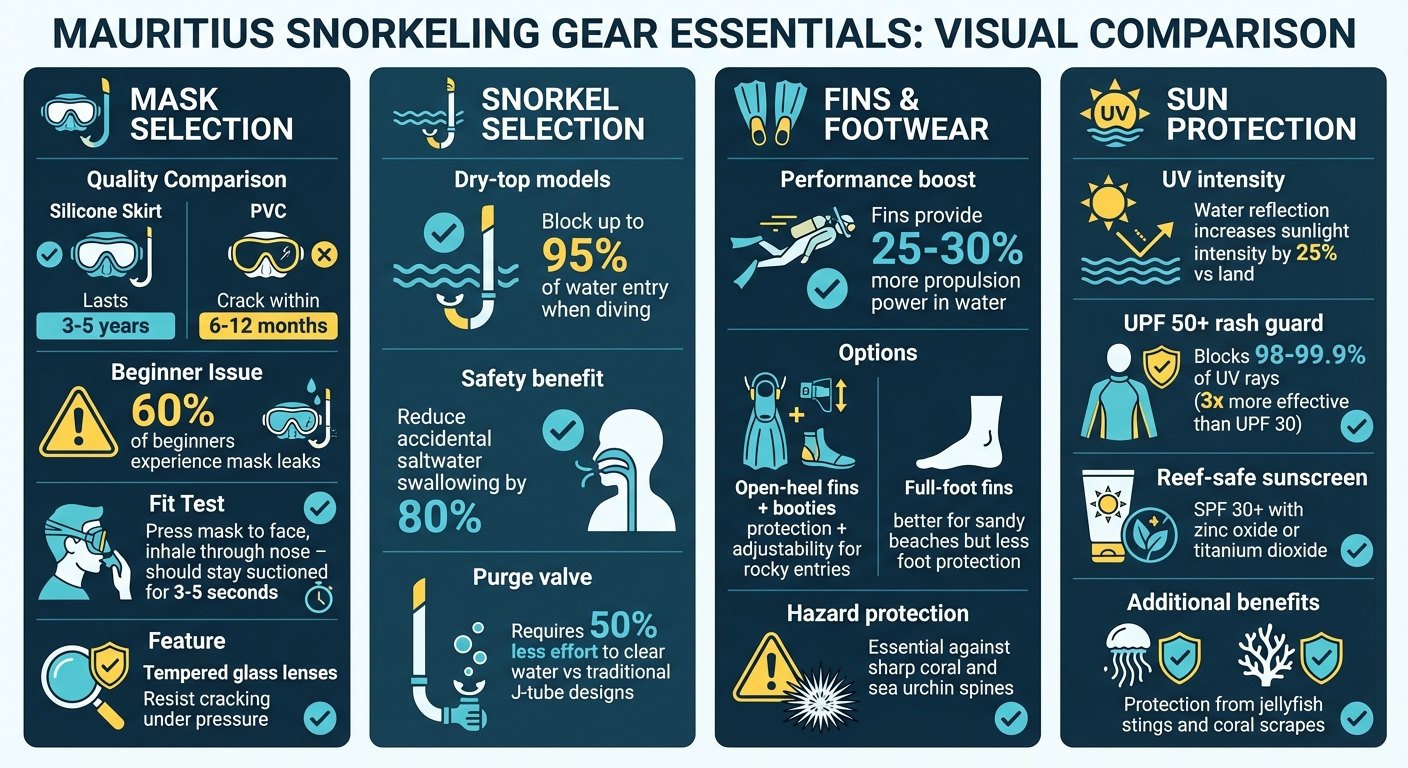
Having the right snorkelling gear can turn a potentially risky adventure into a safe and enjoyable experience. Each piece of equipment serves a purpose – from shielding you against coral scrapes to helping you navigate strong currents. Investing in quality gear is worth it. For example, a mask with a silicone skirt can last 3–5 years, while cheaper PVC options often crack within 6–12 months.
Mask and Snorkel Selection
Your mask is your window to the underwater world, so a proper fit is essential. Masks with high-quality silicone skirts create a watertight seal, preventing leaks – a common issue that frustrates 60% of beginners. Tempered glass lenses are another must-have, as they resist cracking under pressure or impact, especially in shallow reef areas where unexpected waves can push you around. Here’s a quick fit test: press the mask against your face without using the strap and inhale through your nose. If it stays suctioned for 3–5 seconds, you’ve got a good fit.
When choosing a snorkel, dry-top models are highly recommended. These feature a floating valve that blocks most water entry (up to 95%) when you dive below the surface, reducing the chances of accidentally swallowing saltwater by 80%. Look for snorkels with a purge valve at the bottom – it makes clearing trapped water much easier, requiring 50% less effort than traditional J-tube designs. For new masks, cleaning the lenses with toothpaste can remove any residue and help prevent fogging.
Fins and Water Shoes
Once you’ve sorted your mask and snorkel, the next step is selecting fins and footwear. Fins are essential for increasing propulsion, giving you 25–30% more power in the water to handle unexpected currents. As Wayne Sentman from Oceanic Society notes, "Fins are your security blanket. They get you out of currents, they allow you to cover large distances, they should enhance your power in the water."
Don’t overlook foot protection. Water shoes or neoprene booties are crucial for avoiding injuries from sharp coral or sea urchin spines, common hazards in snorkelling spots like Blue Bay and Trou aux Biches. Open-heel fins paired with booties offer excellent protection and adjustability for various foot sizes, especially useful for rocky shore entries. On the other hand, full-foot fins are better for sandy beaches but leave your feet exposed to potential punctures.
Sun and Skin Protection
While your gear protects you underwater, don’t forget to guard your skin against the tropical sun. Sunlight reflects off the water, increasing its intensity by 25% compared to on land, making sunburn a real concern during long snorkelling sessions. A UPF 50+ rash guard is your best defense, blocking 98–99.9% of UV rays – about three times more effective than UPF 30 options. Beyond sun protection, rash guards also shield you from jellyfish stings and minor scrapes from coral, which are common in lagoon environments.
Complement your rash guard with reef-safe mineral sunscreen containing zinc oxide or titanium dioxide. Traditional sunscreens can harm coral reefs when they wash off in the water. Apply SPF 30+ sunscreen generously to exposed areas like your neck, hands, and the backs of your legs – these spots are easy to forget but prone to burns.
Equipment Inspection and Maintenance
Mauritius’ warm, salty waters, combined with its high heat and humidity, can be tough on snorkelling gear. Salt crystals can wear down straps and harden mask skirts, while the intense tropical sun can weaken silicone and plastic parts. Without regular checks, you risk dealing with leaky valves, broken straps, or fogged-up lenses – issues that can ruin your snorkelling experience and obscure the island’s stunning marine life. Taking the time to inspect and maintain your gear not only keeps it in good condition but also ensures a safer adventure in Mauritius’ dynamic waters. Here’s how to keep everything in check.
Before You Enter the Water
Start with your mask: check the lens for scratches or cracks and make sure the silicone skirt is intact and flexible. To test the seal, press the mask against your face without using the strap and inhale lightly – it should stick for about 3–5 seconds. Move on to the snorkel tube, ensuring it’s clear of sand or debris. Check the purge valve to see if it moves freely and inspect the mouthpiece for any tears, cracks, or bite marks.
For your fins, gently flex them to spot any cracks, particularly around the heel straps and edges. Lastly, examine all adjustable straps for signs of fraying or stretching, and make sure the buckles fasten securely. If you’re using new or rented gear, test it in a shallow lagoon before heading to deeper snorkelling spots like Blue Bay. This simple step can save you from unexpected issues.
After-Use Care
Taking care of your gear after snorkelling is just as important. Rinse everything with fresh water right away to prevent salt from building up. Soak your gear for 5–10 minutes to dissolve any salt crystals hidden in seams, buckles, or purge valves. Use a soft toothbrush with mild dish soap or baby shampoo to gently clean mask skirts and fin pockets, but avoid harsh cleaners like bleach, alcohol, or petroleum-based products, as they can damage plastics.
Once cleaned, let your gear dry in a shaded, well-ventilated spot. Direct sunlight can speed up material wear and tear. Stand snorkels upright to drain, store fins flat to avoid warping, and keep masks in protective cases to prevent scratches. For extra care, apply a silicone spray to buckles and straps about once a month. Simple routines like these can help your gear last longer and perform better on your next snorkelling trip.
sbb-itb-3563db6
Avoiding Hazards in Mauritius Waters
Mauritius’ lagoons may seem calm and inviting, but they come with their own set of challenges. Strong currents, hidden obstacles, and busy boat traffic can quickly turn a serene snorkelling trip into something far riskier. Being prepared and knowing how to identify potential dangers is key to enjoying a safe underwater adventure.
Checking Water Conditions
Before diving in, take a moment to evaluate the water conditions. Start by checking the weather and tide schedules. Around full moons and new moons, tides tend to be stronger, with currents becoming more intense in the lagoons. From March to November, the south-easterly trade winds can create choppy waters along the east and south-east coasts, reducing visibility and increasing the swell. If you’re looking for the best snorkelling conditions, plan your visit between November and April, when the water is calmer and warmer, reaching around 28°C.
Once you’re in the water, stay alert to your surroundings. Stop swimming occasionally and look directly at the ocean floor. If you notice two fixed points on the seabed shifting out of alignment, it’s a sign that you’re drifting. Regularly lift your head to check your position against landmarks on the shore, as even mild currents can carry you farther than you realize. If you do get caught in a strong current, avoid swimming directly against it.
"If you find yourself in a strong current never swim against it. Swim diagonally through it".
Pay extra attention to reef channels, where water flows from the lagoon into the open sea – these spots often have the strongest and most dangerous outward currents. Once you’ve assessed the water conditions, keep an eye out for other potential hazards beneath the surface.
Recognizing Marine Dangers
Just as you’d inspect your gear before snorkelling, staying aware of underwater hazards is crucial for a safe experience. The seabed in Mauritius is home to several risks that can cause painful injuries if you’re not cautious. For example:
- Sea urchins: Common in the lagoons of the south and east, they are often found in or near coral.
- Stonefish: Expertly camouflaged, they hide partially buried in coral or algae, making them nearly impossible to spot.
- Lionfish: Admire these striking fish from a distance, as their spines are venomous.
Even coral can be hazardous. Stony corals have tough, abrasive skeletons that can cause deep scrapes, while fire coral delivers a painful sting that causes burning and blistering. According to the Divers Alert Network (DAN), coral injuries often take weeks or even months to heal due to organic material trapped in the wounds. To stay safe, wear water shoes or fins when entering the water from the shore, and avoid reaching into crevices in the reef, as these spots might house moray eels or stonefish. If you need to rest, float on your back or tread water with your knees tucked to avoid standing on the seabed.
Visibility and Boat Awareness
Boat traffic is another factor to consider, especially in popular snorkelling spots like Flic en Flac. To stay visible, wear brightly coloured gear – neon pink, orange, or yellow are great choices – so boat operators can easily spot you. For a safer experience, stick to areas where the water is too shallow for boats, as these spots are often free from strong swells and traffic. Keep an ear out for the sound of approaching engines and stay aware of your surroundings. In calmer locations like Blue Bay, visibility can reach up to 15 metres, although rough seas or cloudy weather can reduce this range.
Snorkeling with Blue Safari Mauritius
If you’re looking for a safer way to explore Mauritius’ underwater world, guided trips are a great choice. Blue Safari Mauritius offers snorkeling as part of its catamaran cruises, speedboat tours, and sailing adventures. They provide all the necessary equipment and have professional crews to oversee every activity, ensuring everything runs smoothly and securely. Since its founding in 1998, Blue Safari Mauritius has guided over 300,000 divers with a steadfast "safety first" approach.
Professional Guidance and Safety
Before any activity begins, Blue Safari’s crew conducts detailed safety briefings. These sessions cover everything from procedures and health protocols to what you can expect underwater. The team, including pilots and safety divers, receives regular training in emergency protocols. They also complete a pre-trip equipment checklist to ensure everything is in perfect working order. For activities like subscooter diving, a dedicated safety diver accompanies each unit for additional in-water support. The crew keeps a close eye on sea conditions – monitoring waves, swells, and visibility – and won’t hesitate to cancel or interrupt a trip if the weather or technical conditions aren’t up to standard. This meticulous attention to safety is matched by the high-quality gear and carefully selected snorkeling sites.
Quality Equipment and Protected Sites
When you book with Blue Safari, all snorkeling gear is included and maintained to the highest standards. Their vessels take you to protected spots like Flat Island, Gunner’s Quoin, and the northern lagoon. These areas are ideal for beginners, thanks to natural coral reef barriers that create calm, shallow waters safe from strong currents. Visibility often exceeds 30 metres during rising tides, giving you an incredible view of the vibrant marine life below. Plus, since these sites are accessed by boat, you avoid the risks associated with shore entries altogether.
Multi-Activity Options
Snorkeling with Blue Safari can easily be paired with other aquatic experiences. Catamaran cruises often include dolphin-watching stops alongside snorkeling, while speedboat tours let you explore multiple northern islands in a single outing. If you prefer to stay dry, you can opt for submarine rides or glass-bottom boat tours to admire the underwater scenery. Booking early not only secures your spot but also allows flexibility to reschedule if weather or visibility conditions aren’t ideal.
Conclusion
Snorkelling safely in Mauritius comes down to three main factors: using the right gear, keeping it in good condition, and being aware of local conditions. For example, water shoes are essential to protect your feet from sea urchins and sharp coral in spots like Blue Bay and Trou aux Biches. On top of that, applying reef-safe sunscreen with at least SPF 30 helps protect your skin while preserving the delicate coral ecosystems.
Taking care of your equipment is equally important – always inspect it before use and rinse it well after each session to keep it in top shape. If you want peace of mind, opting for guided snorkelling with Blue Safari Mauritius is a smart move. Since 1998, they’ve built a strong reputation for safety, following a "safety first" approach. They provide high-quality gear, offer thorough pre-excursion briefings, and keep a close eye on sea conditions, even cancelling activities if the weather or visibility isn’t suitable.
Their excursions go beyond snorkelling, offering catamaran cruises, speedboat tours, and submarine rides. These adventures take you to carefully chosen snorkelling spots with excellent visibility – often more than 30 metres. Thanks to their expertise and attention to detail, you can enjoy Mauritius’ underwater wonders safely, from vibrant coral reefs to an array of marine life.
FAQs
How do I know if it’s safe to snorkel today in Mauritius?
When snorkeling in Mauritius, safety should always come first. Start by checking the weather forecast, water clarity, and sea conditions before heading out. The calm lagoons on the west and northwest coasts are perfect spots for a relaxing and safe snorkeling experience.
Avoid snorkeling if the weather is windy, the water is rough, or visibility is poor – it’s just not worth the risk. To stay even safer, plan your snorkeling trip for early in the day when conditions are usually more stable, and always bring a buddy along.
For real-time updates and expert advice, rely on local resources like Blue Safari Mauritius or weather reports. They can help ensure a safer and more enjoyable underwater adventure.
What should I do if a current starts pulling me out?
If you get caught in a current while snorkeling, the most important thing is to stay calm. Fighting against the current will only tire you out. Instead, conserve your energy and swim parallel to the shore – this will help you escape the current more effectively. Before you even get in the water, take a moment to evaluate the ocean’s conditions. Plan your entry and exit points carefully to steer clear of potential hazards. Knowing your limits and steering clear of strong currents can make all the difference in staying safe.
What’s the right first-aid for coral or sea-urchin injuries?
If you’re dealing with a coral or sea urchin injury, start by gently removing any visible spines or fragments from the wound. Use seawater to rinse the area thoroughly – avoid using fresh water, as it can irritate the injury. After cleaning, apply an antiseptic to reduce the risk of infection. Keep an eye on the wound for symptoms like redness, swelling, or persistent pain. If these occur, or if the pain doesn’t subside, it’s important to seek medical help promptly.