
Seasickness can ruin your ocean adventure, but it doesn’t have to. Here are five proven ways to prevent or manage it effectively:
- Over-the-Counter Medications: Take antiemetics like meclizine or dimenhydrinate an hour before boarding. They block nausea triggers and are available at pharmacies in Mauritius.
- Ginger Remedies: Ginger capsules, lozenges, or tea can naturally ease nausea without causing drowsiness. Take them 1–2 hours before your trip.
- Acupressure Wristbands: These bands apply pressure to the Nei-Kuan point on your wrist, helping reduce nausea. They’re safe, reusable, and easy to find locally.
- Choose the Right Spot on the Boat: Stay in the center or lower decks for less motion. Avoid the bow, stern, and high decks to minimize discomfort.
- Pre-Tour Prep: Get good sleep, eat light meals, stay hydrated, and avoid strong smells or heavy foods before your trip.
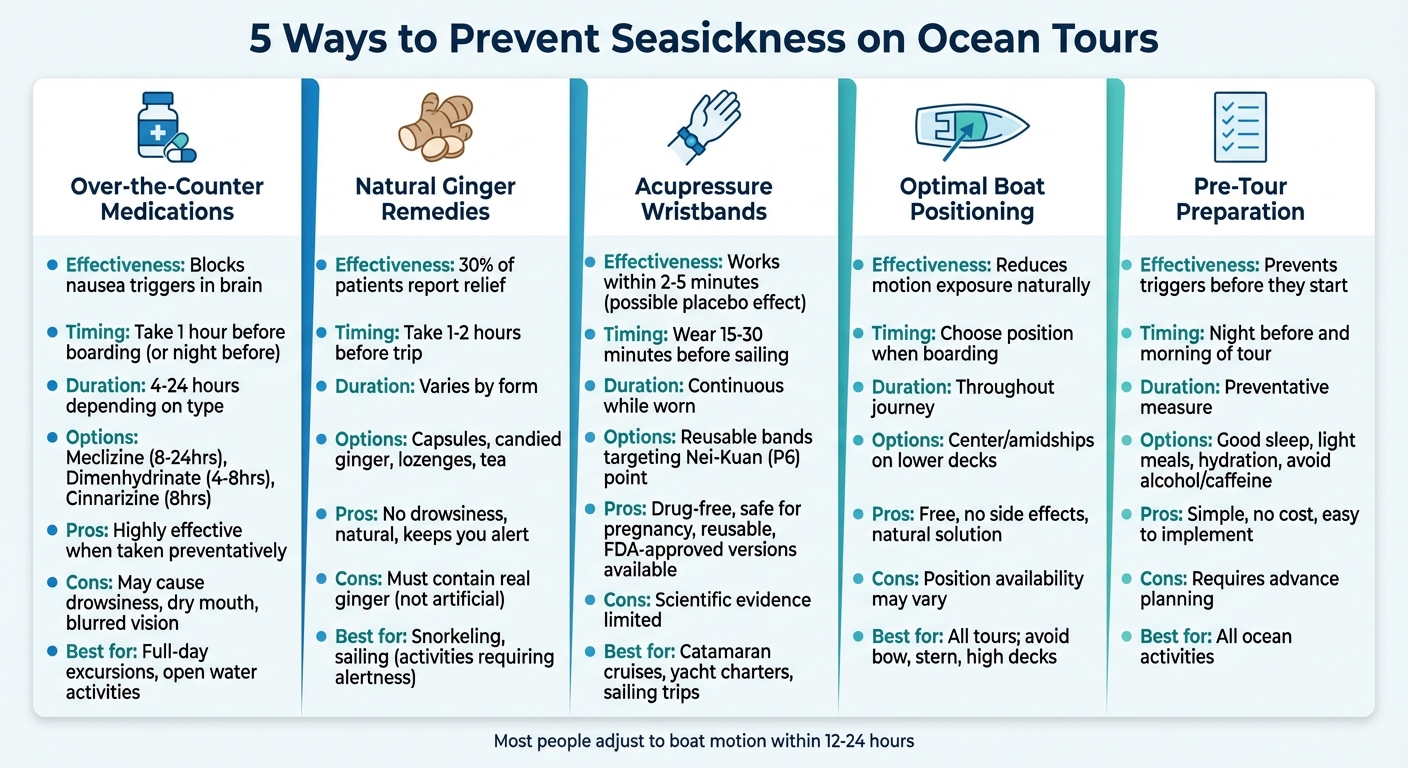
5 Proven Seasickness Prevention Methods Comparison Chart
1. Use Over-the-Counter Antiemetics
How they help prevent or manage seasickness
Over-the-counter antiemetics work by blocking histamine receptors in the brain, which helps prevent seasickness if taken ahead of time. As John F. Golding explains in the CDC Yellow Book:
Medication is most effective when taken before exposure, rather than after the onset of symptoms.
Once vomiting begins, the body absorbs oral medications less effectively due to slowed stomach activity. That’s why taking these medications in advance is so important. Popular choices include meclizine (Bonine), which lasts 8–24 hours and is less likely to cause drowsiness; dimenhydrinate (Dramamine Original), effective for 4–8 hours but often linked to drowsiness; and cinnarizine (Stugeron), which typically works for around 8 hours.
How to use them during ocean tours
For the best results, take your first dose at least an hour before boarding. Some even recommend taking it the night before for maximum effectiveness. It’s smart to test the medication at home to see how you react to potential side effects like drowsiness, dry mouth, or blurred vision. Stay hydrated to avoid dehydration or headaches, ensuring you can fully enjoy the beauty of Mauritius’ marine life without discomfort.
Best activities for these medications
For shorter tours, like snorkeling or dolphin watching (up to six hours), meclizine or dimenhydrinate are good options. On full-day excursions, meclizine is a better choice due to its longer-lasting effects. These medications are particularly effective for activities in open waters or on smaller boats.
Where to find them in Mauritius
You can buy antiemetics such as Nausicalm (dimenhydrinate), Bonine/Antivert (meclizine), or Stugeron (cinnarizine) at local pharmacies in Mauritius. Speak to a pharmacist for advice and make sure to purchase them before heading to the jetty.
sbb-itb-3563db6
2. Try Natural Ginger Remedies
How well they prevent or reduce seasickness symptoms
If you’re looking for a non-drowsy alternative to over-the-counter medications, natural remedies like ginger might be the answer. Ginger works by calming nausea through its effect on digestive signals. In fact, research suggests it can be more effective than medications like Dramamine, and the best part? It doesn’t leave you feeling groggy. Qasim Mohamedbhai, Lead Pharmacist at Travel Clinic Bromley, highlights its effectiveness:
Ginger has the strongest evidence
In real-world use, about 30% of patients report noticeable relief from seasickness when using ginger. Unlike pharmaceutical antihistamines, ginger allows you to stay alert – perfect for activities like snorkelling or sailing where you need to be sharp and focused.
How easy they are to use during ocean tours
Ginger remedies come in a variety of forms, making them incredibly easy to use while you’re out at sea. For those who dislike the strong taste, capsules are a discreet and convenient choice. Prefer something you can nibble on? Candied ginger slices, lozenges, or even ginger gum can provide quick relief when nausea hits. If you’re a fan of tea, steeping fresh ginger in hot water before your trip is another soothing option. Just a heads-up: if you opt for ginger ale, make sure it’s made with real ginger, as many commercial sodas rely on artificial flavoring and won’t offer the same benefits. To get the best results, take ginger 1–2 hours before your boat ride and pair it with dry crackers for added comfort. It’s a practical, pocket-friendly remedy that’s easy to carry on any marine adventure.
Where to buy them locally
In Mauritius, ginger remedies are widely available at pharmacies and health stores. Before heading to the jetty, stock up on your preferred format – whether it’s capsules, candied ginger, lozenges, or herbal teas. If you’re unsure which option suits you best, a pharmacist can guide you toward the right choice for your needs.
3. Wear Acupressure Wristbands
How They Help with Seasickness
If you’re looking for a non-medicinal way to tackle seasickness, acupressure wristbands might be worth a try. These bands are designed to press on the Nei-Kuan (P6) point on your wrist with a small plastic bead, a spot believed to help ease nausea and vomiting. While scientific studies haven’t conclusively proven their effectiveness beyond a possible placebo effect, many travelers swear by them. As Tom Stoffregen, a Kinesiology Professor at the University of Minnesota, puts it:
"Still, if there’s a placebo effect, and you don’t get sick, then I don’t care about the science. It’s money well spent."
One major perk? They’re completely safe, even for pregnant women, and some versions are FDA-approved.
Using Them During Ocean Adventures
These wristbands are simple to use, making them a convenient option for ocean tours. To find the Nei-Kuan point, place your middle three fingers on the inside of your wrist. The point is located just below the first crease, under your index finger, between the tendons. Position the band’s plastic stud directly over this spot on both wrists. They usually start working within 2 to 5 minutes, so it’s a good idea to put them on 15–30 minutes before setting sail. If you start feeling queasy, you can press down on the stud for added relief. Plus, they’re reusable and easy to clean, which makes them a practical travel accessory.
Best Activities to Use Them For
Acupressure wristbands are particularly useful for activities like catamaran cruises, private yacht charters, or sailing trips. To get the most out of them, combine their use with focusing on the horizon. Staying in the center of the boat or on an outer deck where you can clearly see the horizon can help reduce motion-related discomfort.
Where to Find Them in Mauritius
If you’re in Mauritius, you can pick up acupressure wristbands at local pharmacies, drug stores, or health shops. Make sure to grab a pair before your trip so you can put them on early and enjoy your ocean adventure without worry.
4. Choose the Best Positions on Board
Picking the right spot on a boat can make a world of difference when it comes to avoiding seasickness. The centre of the vessel, or amidships, is your best bet for stability. This part of the boat acts as the pivot point, where motion from rolling and pitching is at its lowest. In contrast, the bow (front) and stern (back) are far more susceptible to movement, making them less comfortable for those prone to seasickness. Staying central ensures you experience the smoothest ride possible.
Similarly, higher decks amplify the boat’s motion. For instance, a tall flybridge sways much more than the main deck. To reduce the effects of motion, stick to the lower levels. As Norwegian Cruise Line explains:
The lower and closer you are to the centre of the ship, the less movement you will feel.
A Simple, Cost-Free Solution
Choosing the right spot on board doesn’t require any extra purchases. Unlike medications, wristbands, or other remedies, this approach is entirely natural and free. By simply being mindful of where you position yourself, you can significantly improve your comfort without any added expense.
Tailored Tips for Different Tours
These positioning tips can enhance your experience across a variety of ocean activities. For example, on a dolphin-watching tour, standing on the outer deck amidships provides both stability and a clear view of the horizon while you wait for the dolphins to surface. On snorkelling tours, staying in the centre of the main deck can help minimise motion sickness before you dive in. Once in the water, the cool temperature can help recalibrate your balance.
Opt for open decks over enclosed cabins to ensure steady airflow. Avoid areas like the galley or engine room, where strong smells can aggravate nausea. And if you’re on a catamaran, you’re already in luck. Thanks to their dual-hull design, catamarans offer greater stability and less side-to-side rolling compared to traditional monohull boats.
5. Follow Pre-Tour Preparation Practices
How Well They Prevent or Reduce Seasickness Symptoms
When it comes to seasickness, preparation can make all the difference. Jennifer Barger, Senior Travel Editor at National Geographic, aptly notes:
"The easiest way to combat motion sickness is to prevent it from happening in the first place."
Addressing common triggers like hunger, cold, fatigue, fear, and thirst before you even step aboard can significantly lower your chances of feeling seasick. By proactively managing these factors, you’re setting yourself up for a much more enjoyable and memorable experience with Mauritius’ stunning marine life.
What Preparation Steps to Take
Taking a few thoughtful steps before your tour can help ensure a smoother outing. Start the night before by prioritizing good sleep, eating a light and easy-to-digest meal (think crackers or bananas), and staying hydrated. Steer clear of heavy, greasy, spicy, or acidic foods that might upset your stomach. It’s also wise to limit caffeine and skip alcohol, as both can worsen symptoms. If you’re prone to motion sickness, consider using oral antihistamines or scopolamine patches – just make sure to follow the recommended timing for these remedies.
On the morning of your tour, continue with light snacks and sip water to stay hydrated. Dress in layers so you can adjust to changing temperatures, as extreme heat or cold can sometimes trigger nausea. Finally, avoid exposure to strong smells before boarding, as these can also provoke discomfort.
How Easy They Are to Follow Before Ocean Tours
The best part? These steps are simple to integrate into your routine with just a little planning. They don’t require special tools or complicated preparations – just mindful adjustments to your habits. By taking these small but effective measures, you can enjoy a smoother, more comfortable adventure on the water.
Conclusion
Taking steps to prevent seasickness can make all the difference in ensuring your time on the ocean is as enjoyable as it should be. Seasickness doesn’t have to derail your Mauritius ocean tour. The five methods discussed here work together to create a strong line of defense against motion sickness. Over-the-counter antiemetics can block nausea triggers, while ginger provides a natural way to calm your stomach. Acupressure wristbands offer a drug-free option by targeting specific pressure points, and selecting the right spot on the boat – like the middle section on lower decks – can minimize the effects of motion. Pair these with a light meal and proper rest beforehand, and you’ll be well-prepared to enjoy the sea.
The great news? Most people adjust to the motion of a boat within 12 to 24 hours, meaning symptoms often fade quickly. So whether you’re exploring vibrant coral reefs on a Blue Safari submarine, spotting playful dolphins from a catamaran, or feeling the rush of a speedboat ride, these tips can help you stay comfortable and fully immerse yourself in the adventure Mauritius has to offer.
FAQs
What are the common side effects of over-the-counter medications for seasickness?
Over-the-counter antiemetics can be helpful for managing seasickness, but they sometimes come with side effects. The most common ones include drowsiness, dizziness, dry mouth, and blurred vision. Others might experience headaches, nausea, constipation, or mild stomach discomfort.
If you’re considering taking these medications, it’s wise to try them out beforehand to understand how your body responds – especially if you’ll need to stay alert for activities like driving or operating machinery. Stick to the recommended dosage, and if you have any concerns, don’t hesitate to consult a healthcare professional.
Is ginger as effective as traditional seasickness medications?
Ginger has long been a go-to natural option for dealing with seasickness. It helps soothe the stomach and ease nausea, particularly when taken before symptoms set in. Many travellers appreciate its effectiveness without the unwanted side effects that often come with standard medications.
On the other hand, conventional seasickness treatments, such as antihistamines like dimenhydrinate, have been clinically shown to alleviate symptoms. However, they may also bring along side effects like drowsiness or a dry mouth. Deciding between ginger and these medications often comes down to personal preference, tolerance for side effects, and how severe the symptoms are.
Can I use acupressure wristbands along with other seasickness remedies?
Yes, acupressure wristbands can absolutely be paired with other seasickness remedies to boost their effectiveness. For instance, you can wear them while taking over-the-counter medications, sipping on ginger tea, or sticking to pre-trip habits like eating a light meal and staying well-hydrated.
The wristbands work by targeting specific pressure points on your wrists, which may help reduce nausea. Using them alongside these additional strategies can make your ocean tour much more comfortable and enjoyable!