
Mauritius is a paradise for marine lovers. Its lagoons, coral reefs, and diverse marine life make it an ideal destination for snorkeling, diving, and boat tours. From the vibrant waters of Blue Bay Marine Park to dolphin encounters in Tamarin Bay, Mauritius offers something for every traveler.
Here’s what you can expect:
- Top Spots: Blue Bay Marine Park, Trou d’Eau Douce Lagoon, and Grand Baie Lagoon are must-visit locations.
- Activities: Snorkeling, diving (for all levels), glass-bottom boat rides, and catamaran cruises.
- Marine Life: Over 1,700 species, including reef fish, sea turtles, and dolphins.
- Best Time to Visit: May to October for clear waters and calm weather.
- Eco-Friendly Travel: Use reef-safe sunscreen, avoid touching corals, and choose operators with sustainable practices.
Plan for unforgettable underwater adventures while respecting the island’s fragile ecosystems.
Glass Bottom Boat trip over a Coral Reef in Mauritius
sbb-itb-3563db6
Best Lagoons and Marine Zones in Mauritius
Mauritius is home to several breathtaking lagoons, each offering its own charm and marine adventures. Here’s a closer look at three standout locations that showcase the island’s aquatic treasures.
Blue Bay Marine Park
Situated along the southeast coast, Blue Bay Marine Park is a snorkeller’s dream. As a national park and RAMSAR site, it boasts well-preserved coral reefs and an impressive marine ecosystem. Covering 353 hectares, Blue Bay is home to 108 coral species and 233 fish species, all thriving in waters ranging from 1 to 6 meters deep. With visibility reaching up to 30 meters, even beginners and children can enjoy exploring this underwater paradise. A must-see feature is the giant brain coral, estimated to be over 1,000 years old, with a diameter of 5–6 meters.
Trou d’Eau Douce Lagoon
Located on the east coast, Trou d’Eau Douce Lagoon stands out for its unique brackish waters that nurture diverse marine life. With depths of 1.8 to 3 meters, the lagoon is ideal for families and snorkellers with some experience. It’s also the main gateway to Île aux Cerfs, Mauritius’ most popular islet, welcoming nearly 500,000 visitors annually. For a more tranquil snorkelling experience, Palmar Beach – just 2 km from the village – is a great alternative.
Glass-bottom boat tours offer a leisurely way to explore the coral gardens and vibrant fish. Alternatively, local fishermen can be hired for private reef tours. For those looking for a more adventurous outing, consider starting your boat trip from Grand Baie for a different perspective.
Grand Baie Lagoon
Up in the north, Grand Baie is a lively hub for marine excursions. It’s the go-to spot for catamaran cruises and speedboat trips to nearby islands like Flat Island, Gabriel Island, and Coin de Mire. These tours typically depart in the morning and return by afternoon, with speedboat trips (for up to 12 passengers) lasting between 4.5 and 7 hours.
Snorkeling and Diving in Mauritius
Mauritius is a dream destination for water enthusiasts, thanks to its crystal-clear waters with visibility ranging from 20 to 50 meters. These pristine conditions make it a hotspot for snorkeling and diving, offering a variety of experiences along its stunning coastline.
Top Snorkeling Spots
One of the standout locations is Blue Bay Marine Park, renowned for its protected coral gardens. Here, you’ll find impressive branching and table corals, hundreds of mushroom corals, and an abundance of reef fish.
"The large and healthy branching and table coral found here, as well as the hundreds of mushroom corals present on the seabed, are what make Blue Bay a very special snorkeling location." – Snorkeling Report
For the best views, head to Zones 1 and 2, which are only accessible via guided boat tours. If you’re looking for a quicker, self-guided option, Zone 3 can be reached directly from the shore.
Another excellent spot is Pointe d’Esny, where you can enjoy crystal-clear waters and small reefs just off the shoreline – no boat required. For those seeking a more adventurous underwater landscape, Flic-en-Flac offers caverns, canyons, and arches. Confident swimmers can explore the north side directly from the shore, making it perfect for those wanting more than just a flat reef.
Diving Options for All Levels
Whether you’re a beginner or an experienced diver, Mauritius has options to suit everyone.
- Beginners can try an introductory dive (baptême), which includes pool training followed by a one-hour sea dive. Prices typically range from €70 to €90, and no prior experience is needed.
- Certified divers with an Open Water qualification can explore depths of up to 18 meters. Popular sites include the Stella Maru, a sunken Japanese ship that has transformed into a thriving artificial reef, located at depths between 20 and 26 meters. In the northern part of the island, exploration dives start at around €47 per person.
- Advanced divers have access to deeper and more challenging sites, such as the Silver Star and Djabeda wrecks, which lie at 30 to 40 meters. Drift dives through spots like Belle Mare and the Shark Pit near Coin de Mire offer thrilling encounters with grey and blacktip reef sharks. For the best conditions, plan your dives between November and May, when water temperatures hover between 24 °C and 29 °C, and visibility is at its best.
Marine Life You Can Expect to See
Whether snorkeling or diving, you’ll be greeted by an incredible variety of marine life – over 1,700 species, to be exact. Expect to see colorful reef fish like parrotfish, butterflyfish, surgeonfish, and Moorish idols. Crevices often hide clownfish, trumpetfish, and moray eels, adding to the underwater spectacle.
Sea turtles, particularly green and hawksbill turtles, are a favorite sight for many. They’re frequently spotted grazing on reefs, especially near Grand Baie and Tamarin Bay. The west coast, notably Tamarin Bay, is also a prime location for dolphin encounters, with spinner and bottlenose dolphins making appearances in the early morning.
For those diving into deeper waters, the rewards are even greater. Eagle rays, stingrays, and barracudas are often seen in open channels and passes. The reefs themselves are a marvel, built from over 160 coral species, ranging from intricate branching forms to expansive table corals. It’s a vibrant underwater world waiting to be explored.
Boat Tours: Catamaran, Speedboat, and Glass-Bottom
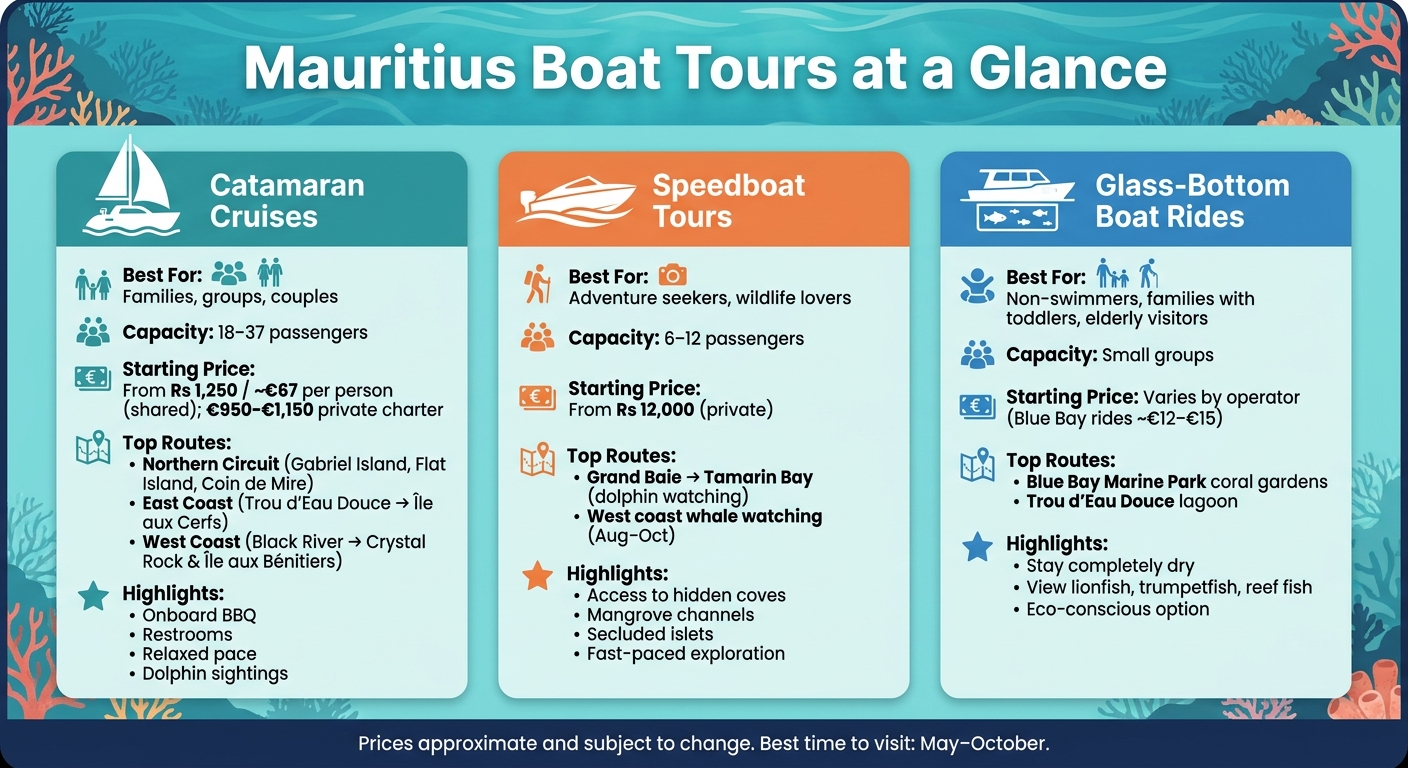
Mauritius Boat Tours Compared: Catamaran vs Speedboat vs Glass-Bottom
Take your coastal exploration in Mauritius to the next level with a boat tour. Whether you’re in the mood for a laid-back cruise, a high-speed adventure, or a serene glimpse into underwater life, there’s a boat experience for everyone. While snorkeling and diving immerse you in the marine world, these tours let you enjoy the beauty of Mauritius from above the waves.
Catamaran Cruises
Catamarans are perfect for families, couples, or groups looking for a mix of comfort and adventure. These spacious boats accommodate 18–37 passengers, offering plenty of room to relax, onboard BBQ facilities, and restrooms. Popular routes include:
- Northern Circuit: Departing from Grand Baie to explore Gabriel Island, Flat Island, and Coin de Mire.
- East Coast Route: Starting at Trou d’Eau Douce, cruising toward Île aux Cerfs with a stop at the Grand River South East waterfall.
- West Coast Journey: Leaving from Black River to visit Crystal Rock and Île aux Bénitiers, often featuring dolphin sightings.
"Our Catamaran Cruises offer voyages that promise relaxation, adventure, and a deep connection with the beauty of the ocean." – Blue Safari
Speedboat Tours
For thrill-seekers, speedboat tours are an exhilarating way to explore Mauritius’ coastline. These boats, designed for 6–12 passengers, can quickly navigate to secluded spots like hidden coves, mangrove channels, and lesser-known islets.
On the west coast, speedboats are a top choice for dolphin watching, covering routes from Grand Baie to Tamarin Bay in just a morning. They’re also excellent for whale watching between August and October. These tours are perfect for those who want to pack a lot of adventure into a short time.
Glass-Bottom Boat Rides
Glass-bottom boats offer a gentle yet fascinating way to experience Mauritius’ underwater treasures without getting wet. Through the clear panels, you can spot vibrant coral gardens and marine life such as lionfish, trumpetfish, and schools of reef fish.
This option is ideal for families with young children, elderly visitors, or anyone seeking a calm and eco-conscious way to enjoy the island’s marine beauty.
Marine Parks and Protected Areas in Mauritius
Mauritius is home to some of the most well-protected coastal waters in the Indian Ocean. These areas play a crucial role in maintaining the island’s marine biodiversity.
Why Marine Conservation Matters
Coral reefs, seagrass meadows, and mangroves are more than just scenic underwater features – they provide essential ecological services. They serve as nurseries for young fish, protect coastlines from erosion, and support the livelihoods of local fishing communities by allowing fish stocks to replenish within safeguarded zones. Protecting these habitats is key to maintaining ecological balance and ensuring a sustainable fishing industry.
Efforts to preserve these ecosystems are practical and action-oriented. Daily patrols by rangers help enforce protection rules, permanent mooring buoys have replaced anchors to prevent coral damage, and access to sensitive areas is restricted to certified divers. Community-driven initiatives, along with NGOs like Eco-Sud, are actively involved in restoring damaged reefs and safeguarding critical habitats. A prime example is the Voluntary Marine Conservation Area (VMCA) at Le Morne, a 5.9-hectare seagrass habitat that serves as a feeding ground for critically endangered hawksbill and green turtles.
"Between 2016 and 2019, the Blue Lagoon programme trained 46 maritime guides in responsible conduct and marine biology." – Eco-Sud
These conservation efforts not only protect the environment but also enhance the experience of visiting Mauritius’ marine parks.
Key Marine Parks to Visit
Preservation initiatives ensure that Mauritius’ marine parks remain both stunning and enriching for visitors.
Blue Bay Marine Park is a Ramsar site, an international recognition of its exceptional wetland and underwater ecosystems. Under permanent protection since 1998, this park boasts a shallow reef teeming with diverse coral and fish species. While about 50 % of its coral has been impacted by pollution and rising sea temperatures, more resilient species are beginning to thrive in protected areas. Its shallow waters make it an ideal spot for snorkellers and beginner divers, blending ecological preservation with opportunities for responsible tourism.
Nearby, Île aux Aigrettes offers a unique conservation experience. This 5-hectare coral limestone island is a nature reserve that shelters rare plants found nowhere else, as well as endangered birds like the pink pigeon. Pairing a guided tour of Île aux Aigrettes with a snorkelling trip to Blue Bay provides a holistic view of Mauritius’ natural wonders. These protected zones highlight the island’s status as a top destination for eco-conscious marine exploration.
| Protected Area | Size | Key Features |
|---|---|---|
| Blue Bay Marine Park | 353 ha | Ramsar site, diverse coral and fish species, reef recovery |
| VMCA Le Morne | 5.9 ha | Seagrass meadows, turtle feeding grounds, fish nurseries |
| Île aux Aigrettes | 5 ha | Limestone coral island, endemic flora, pink pigeon sanctuary |
For the clearest waters and calmest conditions, plan your visit between May and October. To explore the pristine Coral Gardens within Blue Bay, it’s best to join a licensed boat tour rather than swimming from the public beach.
Planning, Safety, and Responsible Travel Tips
How to Prepare for Marine Activities
Getting ready for water adventures requires the right equipment. Start with reef-safe, mineral-based sunscreen to protect both your skin and marine life – chemical sunscreens harm coral reefs and should be avoided entirely. For added protection, pack a lightweight rashguard or Lycra shirt, which also shields against jellyfish stings. If you’re visiting during the cooler months (May–October), consider a neoprene suit, especially for windier east coast outings.
Other must-haves include a dry bag to keep your phone and camera safe, water shoes for navigating rocky areas or shallow coral zones, and plenty of drinking water. While most tour operators provide snorkelling gear, bringing your own mask and snorkel ensures a better fit and a more enjoyable experience underwater.
For the best conditions, plan your marine activities between May and October, when underwater visibility is at its peak, and the weather is more stable. Cyclone season, from December to March, often brings rough seas and lower visibility, making it less ideal for lagoon exploration. Alongside preparation, it’s crucial to follow water safety measures to protect yourself and the environment.
Water Safety Guidelines
Mauritius has strict maritime safety rules. For example, all passengers on commercial vessels venturing outside the lagoon must wear Personal Flotation Devices (PFDs). These include SOLAS lifejackets, inflatable belt packs, or self-rescue bracelets. Operators are also required to follow passenger limits and speed restrictions.
"Safety and security are crucial for both tourists and Mauritians for the sound development of the tourism industry. The Tourism Authority wishes to draw the attention of the public… that, at all times, they should strictly comply with all applicable safety and security measures at sea." – Mauritius Tourism Authority
Most local diving centres are PADI-certified and licensed by the Mauritius Tourism Authority. Diving packages usually include mandatory insurance, but it’s a good idea to have personal travel insurance that covers medical emergencies. If you’re not confident about diving after a long break, many clubs offer refresher sessions in a pool before heading into open water. Beyond safety, it’s important to travel in a way that respects marine ecosystems.
Reef-Safe and Low-Impact Travel
Even small actions can have a big impact on delicate coral reefs. Avoid standing on, touching, or collecting coral or shells, as these ecosystems take decades to recover from damage. Feeding fish is another no-go, as it disrupts their natural behaviours and the reef’s ecological balance.
When selecting a tour operator, opt for those who prioritise sustainability. Look for operators that use mooring buoys instead of anchors, limit group sizes, and enforce a strict no-discharge policy on their boats. For example, Blue Safari Mauritius runs catamaran, speedboat, and dolphin-watching tours with experienced crews, offering a structured and eco-friendly way to explore the lagoon. If you’re keen on dolphin watching, start early in the morning when the seas are calm and choose operators who maintain a respectful distance from the animals.
For travellers interested in giving back, some local NGOs offer opportunities to participate in reef monitoring surveys. These citizen science programs allow you to contribute meaningful data on coral health while enjoying your trip.
Conclusion: Mauritius’ Marine Experiences Worth Having
Mauritius is a treasure trove of marine adventures, offering easy access to a variety of well-maintained aquatic ecosystems. Whether you’re snorkelling through the vibrant waters of Blue Bay Marine Park or spotting dolphins at sunrise in Tamarin Bay, the island’s coastline delivers unforgettable moments.
What makes Mauritius special is the sheer variety of activities available. If you’re after a laid-back day on the water, a catamaran cruise to Gabriel Island offers a relaxed, sociable experience. For those seeking something more adventurous, a submarine dive near Trou aux Biches takes you 35 meters deep to explore the Star Hope wreck and a centuries-old anchor from the 17th century. Even if you’re not a swimmer, you can still enjoy the reef’s beauty through a glass-bottom boat tour, perfect for families or anyone who prefers to stay dry.
The best time to visit is between May and October, when the water is at its clearest and conditions are ideal for marine activities. If you’re hoping to see whales, plan your trip between August and October, the prime season for sightings along the west coast.
When visiting, keep eco-conscious travel in mind to help protect these stunning environments. Opt for operators like Blue Safari Mauritius, known for their environmentally friendly practices, skilled crews, and thoughtfully planned excursions. Simple actions, such as using reef-safe sunscreen and maintaining a respectful distance from wildlife, ensure that these marine ecosystems remain vibrant for generations to come. Every small effort counts in preserving the natural beauty that makes Mauritius so extraordinary.
FAQs
Do I need to book lagoon tours in advance?
Yes, booking your lagoon tours ahead of time is a smart move, particularly during the busy season. This ensures your spot is reserved and might even give you access to better prices. If you have any questions or need help planning your excursion, don’t hesitate to reach out – we’re here to assist with booking our activities.
Which lagoon is best for kids and non-swimmers?
Blue Bay Marine Park is an ideal spot for families with young kids or those who prefer to stay dry. You can marvel at the colourful coral reefs and diverse marine life through a glass-bottom boat tour, offering a window into the underwater world without getting wet. For those new to swimming, the calm and shallow lagoon is a safe and welcoming place to take a dip.
If you’re looking for a bit more adventure, the catamaran cruises are a fantastic option. These boats come equipped with spacious decks, shaded areas for lounging, and snorkelling gear designed with kids in mind, making it a relaxing and fun outing for visitors of all ages.
What rules should I follow to protect the coral?
To help safeguard the coral reefs in Mauritius, opt for reef-safe mineral sunscreen containing zinc oxide or titanium dioxide. Avoid touching or standing on coral, and resist the temptation to collect shells or coral fragments. Keep a respectful distance from marine creatures to minimise disturbances. If you’re diving, focus on maintaining good buoyancy control to prevent accidental contact with the reef. Additionally, use designated mooring buoys instead of anchors to protect underwater habitats. Wearing a rash guard not only shields you from UV rays but also reduces the risk of accidental scrapes with coral.