
Mauritius is home to some of the most diverse coral reefs in the Western Indian Ocean, hosting over 1,000 fish species and 138 coral species, with 35 fish species found nowhere else. These reefs not only support marine life but also protect coastlines from erosion and contribute significantly to the island’s tourism-driven economy. However, they are under severe threat from rising ocean temperatures, pollution, and overfishing, with some species already considered locally extinct.
Key Points:
- Biodiversity: Mauritius is home to unique marine species.
- Rare Species: Includes the Mauritian Anemonefish (Amphiprion chrysogaster), alongside diverse coral species and vibrant reef fish found across the Western Indian Ocean
- Threats: Coral cover has dropped by 40% since 2004, with some species disappearing entirely.
- Conservation Efforts: Marine Protected Areas, citizen science programs, and coral nurseries aim to restore reef health.
- Tourism: Submarine tours and snorkelling trips offer eco-friendly ways to observe rare marine life.
Protecting these reefs is urgent. They are not just habitats but also critical to the island’s economy and natural heritage. Sustainable tourism and community-driven conservation are key to preserving this underwater treasure.
Coastal Ecosystems of the Southeast Coast of Mauritius – Project ICEM
sbb-itb-3563db6
Why Rare Species Matter for Reef Ecosystems
Rare and endemic species are the cornerstones of Mauritius’ reef ecosystems. Hard corals like Acropora branchi and Pocillopora indiania play a fundamental role by constructing the reef’s framework using calcium carbonate. These corals form intricate habitats – think crevices, holes, and rubble-like substrates – that provide essential shelter for a wide variety of fish and invertebrates.
"Each species plays a role in shaping the reef’s structure, offering refuge and resources to the countless creatures that call it home." – Coral Reef Alliance
Rare species also thrive through niche specialisation, making them irreplaceable. Take the Mauritian anemonefish (Amphiprion chrysogaster): it forms a unique bond with specific anemones, creating micro-habitats that are vital for its survival. Similarly, the Spotted Tang (Zebrasoma gemmatum) occupies deep-water zones between 15 and 60 metres, where it regulates algae growth in areas beyond the reach of most herbivores. These species fill ecological roles that generalists simply cannot, and their presence strengthens the reef’s ability to endure environmental pressures.
Rare species also enhance ecosystem resilience when faced with environmental stress. Research shows that endemic corals like Acropora branchi and Pocillopora indiania exhibit greater thermal tolerance compared to more widespread species. This resilience suggests they may act as "thermal refuges" during bleaching events, maintaining reef structures when more common corals fail under heat stress. Their survival underscores the importance of conservation efforts to protect these critical species.
Unfortunately, environmental changes highlight the vulnerability of these rare species. In September 2021, Tim McClanahan and his team from the Wildlife Conservation Society surveyed 119 reef sites across Mauritius. Their findings were alarming: the Mauritian and Creole damselfishes were not observed during scuba surveys, indicating they may already be locally extinct. Since the Mascarene Islands have minimal larval connectivity with other regions, the loss of such species is irreversible – they cannot naturally repopulate from nearby areas.
Mauritius’ rare species represent evolutionary lineages found nowhere else on the planet. The world’s 10 richest centres of endemism, including Mauritius, account for only 15.8% of global reefs but are home to 44.8% to 54.2% of all restricted-range species. Protecting these unique species is not just about preserving biodiversity – it’s about safeguarding an irreplaceable part of our planet’s natural heritage.
Rare and Endemic Coral Species
Mauritius is home to around 138 coral species. These corals form the backbone of the island’s reefs, creating intricate habitats essential for marine ecosystems. Thanks to its location in the Western Indian Ocean, Mauritius boasts the highest level of marine species endemism in the region.
Research shows that endemic coral populations thrive more on the leeward side (north and west) than the windward side (east and south). The calmer conditions on leeward reefs, with less severe thermal stress, provide a haven for these delicate species. Unfortunately, even these reefs are facing steep declines.
From 2004 to 2019, hard coral cover dropped by 40%, while soft coral cover plunged by 83%. During this period, nine out of 30 previously recorded coral sub-genera disappeared from lagoon surveys, with most losses occurring on the windward reefs. These alarming statistics highlight the urgent need for focused conservation efforts.
"Mauritius is reported to have the highest marine species endemism in the Western Indian Ocean faunal Province but the status of these species has not been evaluated." – Tim McClanahan, Wildlife Conservation Society
Below, we explore six key coral species that reflect Mauritius’ rich marine biodiversity, their habitats, and the challenges they face.
Acropora branchi and Horastrea indica
Some corals play a critical role in reef architecture. Acropora branchi, endemic to the Western Indian Ocean, thrives on upper reef slopes. Its branching structure is vital for reef formation, but its "Data Deficient" status and declining numbers highlight the lack of information about this species.
Horastrea indica, or blister coral, is unique as the sole species in its genus. It forms large, dome-shaped colonies on shallow sandy reefs at depths of less than 20 meters. This coral relies on symbiotic algae, which also give it its vibrant colors. In 2024, the IUCN upgraded its status from Vulnerable to Least Concern, reflecting stable populations.
Pocillopora indianensis and Seriatopora hystrix
Pocillopora indianensis (sometimes referred to as indiania) is found in upper shallow reef areas. Currently listed as Vulnerable on the IUCN Red List, its survival depends on understanding its thermal limits, a key factor for reef restoration projects in a warming ocean.
"These findings on the thermal resilience of regionally endemic/rare and morphologically different coral species are essential for further reef conservation efforts and the selection of coral species for reef restoration." – Vikash Munbodhe, Department of Biosciences and Ocean Studies, University of Mauritius
Seriatopora hystrix, or birdsnest coral, inhabits shallow reefs and is globally classified as Least Concern. However, its numbers are decreasing in Mauritian waters. Interestingly, this species has shown surprising thermal tolerance, making it a strong candidate for restoration despite its local decline.
Stylophora pistillata and Seriatopora caliendrum
Stylophora pistillata, also known as hood coral, is widely distributed across the Indo-Pacific but is rare in Mauritius, where it is classified as Near Threatened. The reasons for its scarcity in Mauritian waters remain unclear, pointing to gaps in reef research.
Seriatopora caliendrum often inhabits upper reef slopes and is also listed as Near Threatened. Like many other corals in Mauritius, its population is shrinking. However, researchers have recently found some rare coral species thought to be absent from shallow waters thriving in deeper reef zones. This suggests that further exploration of deeper habitats could uncover additional populations of threatened species.
| Species | Habitat Preference | IUCN Status | Population Trend |
|---|---|---|---|
| Acropora branchi | Upper reef slope | Data Deficient | Decreasing |
| Horastrea indica | Shallow sandy reefs (<20 m) | Least Concern (2024) | Stable |
| Pocillopora indianensis | Upper shallow reef | Vulnerable | Decreasing |
| Seriatopora hystrix | Shallow reef environment | Least Concern | Decreasing |
| Seriatopora caliendrum | Upper reef slope | Near Threatened | Decreasing |
| Stylophora pistillata | Various (rare in Mauritius) | Near Threatened | Decreasing |
Rare and Endemic Reef Fish Species
The coral reefs of Mauritius are home to rare and endemic reef fish that are vital to maintaining reef ecosystems and overall biodiversity. These species are often found along the calmer leeward coasts, where conditions are more favorable, thanks in part to ongoing conservation efforts.
"Mauritius is reported to have the highest marine species endemism in the Western Indian Ocean faunal Province." – Tim McClanahan, Wildlife Conservation Society
The Mascarene Islands, which include Mauritius, are considered the fourth most threatened region for fauna globally. Their high levels of endemism combined with the pressures of human activity place them alongside biodiversity hotspots like the Philippines and Indonesia’s Sunda Islands. This highlights the urgency of documenting and protecting these unique species. Below are some key examples of reef fish that play essential roles in Mauritius’ reef ecosystems.
Mauritian Gregory (Stegastes pelicieri) and Mauritian Anemonefish (Amphiprion chrysogaster)
The Mauritian Gregory (Stegastes pelicieri) is a damselfish native to Mauritius and Réunion. It inhabits rocky reef and rubble zones, typically at depths of 1–20 metres. Unlike coral-dependent species, it prefers areas with crevices and shelter. It is reef-associated, territorial, and locally common in suitable habitats.
The Mauritian Anemonefish (Amphiprion chrysogaster) is strictly endemic to Mauritius. This striking fish, with its blackish-brown body and three bright white stripes, grows up to 15 cm long. Living symbiotically with anemones such as Heteractis magnifica and Stichodactyla mertensii, it inhabits lagoons and outer reefs at depths of 2 to 40 metres.
"The adult [Mauritian Anemonefish] is a striking fish. It has a blackish-brown overall colour with three bright white stripes. But the juvenile, to me anyway, is absolutely gorgeous." – Richard Aspinall, Underwater Photographer
During breeding, these anemonefish form pairs, with males guarding and aerating their eggs until they hatch. Juveniles are easily distinguished by a unique white stripe along the top of the caudal fin, a feature absent in adults. However, their reliance on heat-sensitive anemones makes them particularly vulnerable to rising ocean temperatures and bleaching events.
Spotted Tang (Zebrasoma gemmatum) and Roughskin Trunkfish (Ostracion trachys)
The Spotted Tang (Zebrasoma gemmatum) is a reef fish found in deeper waters, typically between 15 and 60 metres. It lives in outer reef crevices, a habitat that reflects the health of deeper reef systems. Its range is confined to the Western Indian Ocean, including Mauritius and Madagascar, and it is currently listed as Data Deficient by the IUCN Red List.
The Roughskin Trunkfish (Ostracion trachys) is endemic to the Western Mascarenes, found only in the waters around Mauritius and Réunion. It occupies reef edges at depths of 15 to 30 metres. Like the Spotted Tang, it depends on the structural complexity of the reef for shelter, relying on coral formations with holes, crevices, and overhangs. Both species serve as indicators of deeper reef health and play a role in supporting the ecosystem.
Pearly Sergeant (Abudefduf margariteus) and Madagascar Anemonefish (Amphiprion latifasciatus)
The Pearly Sergeant (Abudefduf margariteus) is another Mascarene endemic species, found in Mauritius and Réunion. It inhabits shallow coral and rocky reefs at depths of 2 to 8 metres, particularly in lagoons and along reef slopes. Despite its limited range, this species is crucial to shallow reef ecosystems. Its classification as Data Deficient highlights the need for ongoing monitoring and research, with citizen-science initiatives playing a key role.
Summary Table of Key Reef Fish
| Species | Range Status | Depth Range | Primary Habitat |
|---|---|---|---|
| Mauritian Gregory | Mascarene/Regional | 2–20 m | Rocky reefs, rubble, crevices |
| Mauritian Anemonefish | Mauritius Endemic | 2–40 m | Lagoons and outer reefs (with anemones) |
| Spotted Tang | Regional Endemic | 15–60 m | Outer reef holes and crevices |
| Roughskin Trunkfish | Mascarene Endemic | 15–30 m | Reef edges |
| Pearly Sergeant | Mascarene Endemic | 2–8 m | Shallow lagoons and reef slopes |
These species, alongside coral, contribute to resilient reef ecosystems. However, they face significant threats, emphasizing the need for stronger conservation efforts in Mauritius’ reef systems.
Viewing the Marine Fauna & Flora with Blue Safari Mauritius
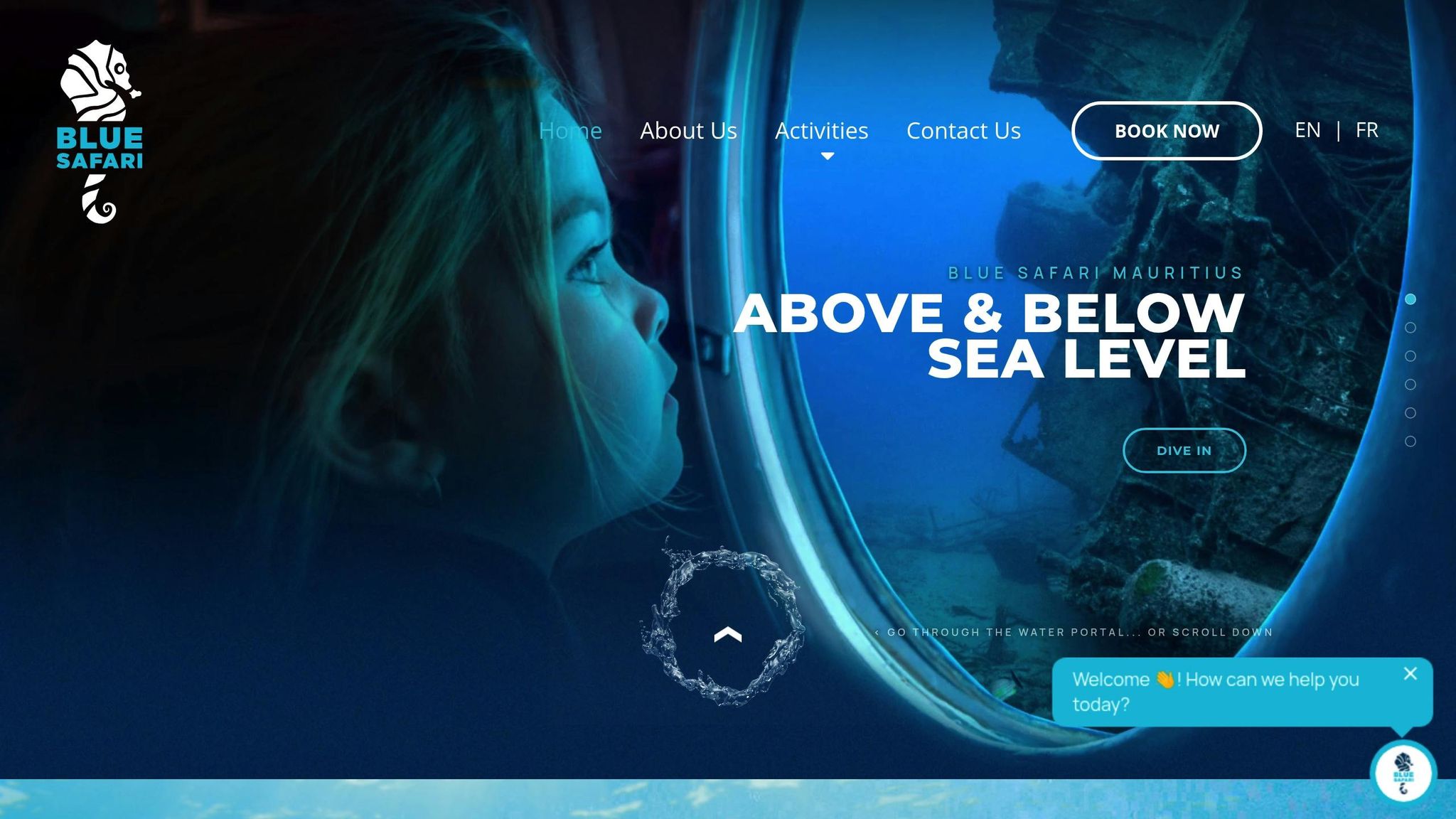
Blue Safari Mauritius offers a unique chance to explore underwater ecosystems through its two leisure submarines, the BS1100 and BS600. These submarines dive to depths of 35 metres, unveiling the hidden beauty of deep-reef ecosystems and rare marine life. The BS1100, designed to accommodate 10 passengers, offers a 40- to 45-minute underwater experience where visitors can spot fascinating species. A standard trip includes boat transfers and safety briefings and lasts about two hours. This journey provides an intimate connection to the vibrant and diverse marine life of Mauritius’ reefs.
"Bringing customers closer to the coral reef to show them the true state of the barrier." – Dawood Jawahir, Commercial Director of Blue Safari
During the submarine tours, pilots enrich the experience with educational commentary on marine ecology, fish behaviour, and reef conservation. Between April 2018 and June 2019, Blue Safari collaborated with a Reef Conservation and University of Mauritius citizen science programme. This initiative trained divers to identify 16 rare and endemic species across 119 reef sites, helping visitors understand the importance of preserving Mauritius’ unique marine biodiversity. Through this blend of exploration and education, Blue Safari highlights the urgent need to protect these fragile ecosystems.
Submarine tours also include a visit to the Star Hope shipwreck, which was sunk in 1988 to promote coral growth. Today, it serves as a thriving habitat for both coral and marine creatures. All excursions follow a strict "no-touch" policy to protect these delicate environments. The experience is designed to be inclusive, welcoming visitors of nearly all ages, including children as young as 9 months. By making these underwater adventures accessible, Blue Safari not only provides unforgettable experiences but also fosters a deeper sense of responsibility for preserving Mauritius’ marine treasures.
Conservation Challenges and Efforts
Mauritius’ coral reefs face serious threats from a mix of environmental and human-induced stressors. Rising sea surface temperatures are climbing at a rate of 0.16°C per decade – outpacing the global average of 0.11°C. This warming trend has led to severe thermal stress events, wiping out nearly all coral cover in some areas. The reefs along the eastern and southern coasts are particularly vulnerable, with some studies forecasting local coral extinctions as early as 2025, extending to 2070 for others. These climate-driven challenges are further exacerbated by human activity.
Human impact significantly worsens reef degradation. Agricultural runoff loaded with fertilisers, untreated industrial sewage, and sedimentation from coastal hotel developments all contribute to the problem. Overfishing adds to the strain, threatening endemic marine species. Compounding these issues, outbreaks of coral-eating Crown-of-Thorns Starfish have caused additional damage, particularly in the southeast and northwest regions. Alarmingly, certain range-restricted species, such as the Mauritian damselfish (Plectroglyphidodon randalli) and Creole damselfish (Pomacentrus agassizii), have not been seen in recent surveys and are now considered potentially extinct.
"The Mascarene Islands [are] the fourth most threatened fauna based on endemism and human activities, after the Philippines, Gulf of Guinea, and Sunda Islands of Indonesia." – Tim McClanahan, Wildlife Conservation Society
This stark warning highlights the critical need to address both global and local pressures to preserve Mauritius’ unique marine ecosystems.
Mauritius has established several Marine Protected Areas, covering a total of 7,190 hectares. Among them, the Blue Bay Marine Park received recognition as a Ramsar Wetland of International Importance in 2008. Despite these protections, surveys of 119 reef sites reveal that rare coral and fish species remain scarce, pointing to a gap between protection on paper and tangible outcomes. Voluntary Marine Conservation Areas, championed by NGOs like Reef Conservation, involve local communities in protecting designated zones by halting resource extraction.
In addition to regulatory measures, grassroots initiatives are making a difference. For instance, in March 2018, the Mauritian Scuba Diving Association introduced a citizen science programme. This initiative trains divers to identify and document 10 rare fish species and 6 rare coral species across reef sites. Following the 2020 Wakashio oil spill, the Mauritius Oceanography Institute expanded its coral restoration efforts. Hundreds of local fishers, including a notable 33% of women, were trained in sea-based coral nursery techniques to raise awareness about marine conservation. These community-driven efforts play a vital role in protecting Mauritius’ fragile marine ecosystems.
Conclusion
Mauritius stands out as a biodiversity hotspot in the southern Indian Ocean, home to extraordinary marine life and coral reefs that play a crucial role in coastal protection and ecological balance. These reefs act like "underwater forests", offering shelter and breeding grounds for marine species while protecting shorelines from erosion. With the highest level of marine species endemism in the Western Indian Ocean, preserving these ecosystems is essential to protect species found nowhere else on the planet. This dual ecological and economic significance makes Mauritius’ reefs irreplaceable.
Exploring these unique marine habitats responsibly can make a meaningful difference. Blue Safari Mauritius provides submarine dives reaching 35 metres, offering a glimpse of deep-reef species without disrupting delicate coral ecosystems. These guided tours combine marine education with conservation insights, promoting sustainable tourism and raising awareness about the importance of protecting these environments.
Visitors can contribute to conservation efforts by adopting simple practices such as using reef-safe sunscreen, avoiding direct contact with coral, and respecting marine wildlife. For those eager to do more, joining citizen science programmes helps researchers monitor rare species and track the health of reef ecosystems.
"By prioritising sustainability, visitors and tour operators can help preserve these aquatic treasures for generations to come." – Blue Safari Mauritius
Protecting these reefs also has a direct impact on local livelihoods. Supporting 30,000 jobs through fisheries, tourism, and coastal protection, these ecosystems are vital to the island’s economy. Opting for eco-friendly tour operators ensures that tourism revenue is reinvested into preserving these marine treasures, securing their future for both the environment and the communities that depend on them.
FAQs
How can tourists help protect the reefs?
Tourists visiting Mauritius can play a crucial role in protecting its coral reefs by embracing eco-conscious practices. Simple actions, like avoiding any physical contact with corals and ensuring boats are not anchored on reefs, help prevent harm to these delicate ecosystems.
Additionally, supporting sustainable tourism is key. This might include using reef-safe travel guides, volunteering for conservation projects, or contributing to local environmental initiatives. Even small donations to these efforts can have a meaningful impact.
Choosing responsible tour operators is another important step. By prioritizing operators committed to reef preservation, visitors help ensure these vibrant underwater habitats remain intact for generations to come.