
Mauritius is a paradise for underwater enthusiasts, offering crystal-clear lagoons, vibrant coral reefs, and diverse marine life. With over 430 marine species, 200 types of coral, and habitats like fringing reefs, atolls, and mangroves, the island’s waters are a haven for snorkelers, divers, and marine explorers. Key highlights include:
- Marine Biodiversity: Spot tropical fish, sea turtles, spinner dolphins, and humpback whales. Endemic species like the Mauritian clownfish add a special touch.
- Top Locations: Blue Bay Marine Park, Trou aux Biches, and Flic en Flac stand out for their coral gardens, sea turtles, and dolphin encounters.
- Threats & Conservation: Coral bleaching, pollution, and the 2020 oil spill have impacted reefs, but initiatives like coral farming are helping restoration efforts.
- Responsible Tourism: Use reef-safe sunscreen, avoid touching corals, and maintain respectful distances from marine life to protect these fragile ecosystems.
Mauritius also offers unique experiences like submarine excursions, sub-scooter dives, and catamaran cruises for those seeking a different perspective of its underwater world. Whether you’re a beginner or an experienced diver, Mauritius promises unforgettable marine adventures.
Mauritius Marine Life Extravaganza!
sbb-itb-3563db6
Coral Reefs and Marine Habitats
The coral reefs around Mauritius create intricate ecosystems that support thousands of marine species. These reefs are divided into zones, ranging from shallow lagoons to steep fore-reef slopes, which not only protect the coastline from erosion but also host over 1,700 marine species. With Mauritius being famous for its crystal-clear waters, these reefs provide the perfect environment for a thriving underwater world.
5 Types of Coral Reefs in Mauritius
Mauritius is surrounded by approximately 150 km of coral reefs that protect its coastline and create shallow lagoons. Five reef forms are commonly described in the region: fringing reefs, patch reefs, atolls, reef flats, and barrier reefs. Fringing reefs dominate the island and run close to the shoreline, forming calm lagoons that are ideal for swimming and beginner snorkeling. Patch reefs occur within lagoons where coral grows on raised areas of the seabed. Reef flats are broad, shallow platforms of coral that may become exposed during low tide. Small barrier reef sections occur farther offshore in some areas. The remote St. Brandon (Cargados Carajos) archipelago, a dependency of Mauritius, consists of a large coral reef platform with numerous islands and sandbanks and represents one of the most pristine reef environments in the western Indian Ocean.
| Reef Type | Characteristics and Location |
|---|---|
| Fringing Reef | Found close to the shore, encircling the island and offering coastal protection. |
| Patch Reef | Isolated coral communities in shallow waters where the seabed rises. |
| Atoll | Ring-shaped coral islands, especially in the St. Brandon archipelago. |
| Reef Flat | Calcified platforms exposed at low tide. |
| Barrier Reef | The outermost reef structure contributing to marine biodiversity. |
Marine Plants and Organisms Around the Reefs
The reefs are surrounded by seagrass beds and mangroves, including species like Rhizopora mucronata and Bruguiera gymnorhiza, which act as nurseries for juvenile fish while stabilising sediments and filtering nutrients. Marine algae, such as Sargassum, Halimeda, and Ulva, are abundant and serve as a food source for herbivorous fish like parrotfish, forming the base of the local food chain.
A host of smaller organisms also contribute to the reef’s biodiversity. Sea anemones form partnerships with clownfish, nudibranchs feed on sponges and anemones, and creatures like octopuses and cuttlefish use the reef’s crevices for camouflage and hunting. However, these vibrant ecosystems are under increasing strain.
Threats to Coral Reefs
Mauritius’s reefs face numerous challenges, both natural and human-induced. Rising sea temperatures have triggered coral bleaching events since 1998, with live coral cover in some locations dropping from over 60% to less than 40% during the 2025 bleaching event. Between 2002 and 2010, the island’s overall live coral cover fell from about 50% to just 20%.
The MV Wakashio oil spill in August 2020 released 1,000 tonnes of oil, contaminating 27 square kilometres and severely damaging the eastern barrier reef. Other threats include agricultural runoff from sugarcane fields, coastal development, overfishing, and physical damage caused by anchors and tourists. Additionally, Mauritius’s position within a cyclone-prone zone means that severe storms periodically devastate reef systems.
Despite these challenges, conservation efforts are making progress. In June 2025, the Coral Garden Conservation team reported that while 70% of nursery corals at St. Felix had bleached in March 2025, species like Acropora selago and Porites fully recovered. In contrast, over half of the wild Acropora colonies in the same area perished. Since 2017, the Mauritius Oceanography Institute, under the leadership of Dr. Pierre E.D. Marie and Oocheetsing Sadasing, has been training local fishers in coral farming as part of a community restoration project. By February 2026, women made up a third of the trainees, using innovative methods to attach coral fragments to metal structures designed to withstand cyclones.
"One day, our fishers may be multitasking, not only fishing but also restoring corals." – Dr. Pierre E.D. Marie, Scientist, Mauritius Oceanography Institute
For snorkelers and divers, understanding these habitats can enhance their underwater adventures. Visitors can contribute to reef protection by using reef-safe sunscreen, avoiding contact with corals, keeping a respectful distance from marine life, and choosing eco-conscious tour operators.
Marine Species You’ll See
Mauritius’s waters are alive with an array of marine creatures, from vividly coloured tropical fish to rare species found only in this region. Around 200 coral species form the backbone of these vibrant underwater ecosystems.
Tropical Fish and Endemic Species
Parrotfish are among the most iconic residents, known for their beak-like mouths that scrape algae off coral. You’ll also spot butterflyfish, angelfish, wrasses, groupers, and snappers swimming through the reefs. A standout species is the Mauritian clownfish (Amphiprion chrysogaster), an endemic fish with a striking black and white body highlighted by yellow or orange fins. These clownfish grow to lengths of 9 to 15 centimetres and inhabit depths of 2 to 40 metres.
"The Indian Ocean, and more precisely Mauritius, still has many unexplored underwater areas, and is still full of well-kept secrets and special/emblematic fish that will not fail to surprise you." – Cindy, Teaching Director, Panorama Divers
Other endemic species include the Mauritian Gregory (Stegastes pelicieri) and the Mascarene Combtooth Blenny (Alticus monochrus), a fascinating amphibious fish often found in intertidal zones. Beyond these, you might encounter Moorish idols with their striking white, yellow, and black patterns, Indian lionfish with venomous dorsal fins that hunt at night, and giant moray eels, which can grow up to an impressive 3 metres.
Adding to this kaleidoscope of fish are sea turtles and marine mammals, which further enrich Mauritius’s underwater world.
Sea Turtles and Marine Mammals
Three species of sea turtles frequent these waters: the Hawksbill turtle (Eretmochelys imbricata), the Green sea turtle (Chelonia mydas), and the Loggerhead turtle (Caretta caretta). Green turtles dominate the local population, making up approximately 75%, while Hawksbills account for about 17%. Hawksbill turtles are critically endangered, and Green turtles are endangered, with both species nesting on Mauritian beaches from November to March. The remote St. Brandon atoll remains a vital nesting site for these turtles.
Hawksbill turtles stand out with their narrow, pointed beaks and patterned shells featuring overlapping scutes. Their primary diet consists of sponges. Green turtles, on the other hand, have smoother, oval-shaped shells and rounder heads, grazing on seagrass and algae in shallow lagoons. Loggerheads, less commonly seen, are recognised by their large, powerful heads and reddish-brown shells. They prefer deeper waters, where they feed on crabs and molluscs.
Among marine mammals, spinner dolphins are the most frequently spotted, especially along the west coast near Black River (Grande Rivière Noire). Sperm whales are another highlight, found in deeper offshore areas and often seen during whale-watching trips. When observing these incredible creatures, it’s crucial to keep a respectful distance – chasing or touching them can cause undue stress.
Best Snorkelling and Diving Locations
Mauritius is a haven for marine enthusiasts, offering a variety of snorkelling and diving spots that cater to all skill levels. From tranquil lagoons perfect for beginners to deep, vibrant reefs for seasoned divers, the island’s marine biodiversity is truly a treasure. Whether you prefer snorkelling right off the beach or exploring deeper waters by boat, Mauritius promises unforgettable underwater experiences.
Blue Bay Marine Park
Situated in the southeast, Blue Bay Marine Park has been a protected area since 1997, covering 353 hectares of stunning lagoons and coral formations. The park’s highlight is its "coral garden", home to brain coral structures that are over 800 years old. With water depths ranging from 1 to 5 metres, this marine park is a paradise for snorkellers, boasting over 50 coral species – including giant brain, table, and branching corals, and more than 70 fish species.
Pointe aux Piments and Trou aux Biches
Located on the northwestern coast, Pointe aux Piments and Trou aux Biches are known for their calm, shallow waters and frequent sightings of sea turtles. Trou aux Biches is particularly famous for its green and hawksbill turtle encounters, making it a favourite among snorkellers. Families or those who prefer to stay dry can opt for glass-bottom boat tours.
This area is also a hotspot for macro diving, where snorkellers and divers can discover smaller marine creatures like nudibranchs, mantis shrimp, and pipefish nestled in the coral. If you’re feeling adventurous, nearby shipwrecks offer an exciting dive, with vibrant soft corals adding to the spectacle. However, be cautious of boat traffic, as these popular zones often see heavy activity.
While the northern coast offers serene snorkelling opportunities, the western shores provide a mix of accessible and more adventurous underwater experiences.
Flic en Flac and Tamarin
On the west coast, Flic en Flac is a top destination for snorkelling right from the shore. The reef lies just a few metres from the beach, making it ideal for beginners exploring shallow lagoons or advanced divers venturing into deeper canyons. Here, you might spot triggerfish, eagle rays, snowflake morays, and white-spotted surgeonfish. To protect your feet from sea urchins and sharp coral, it’s advisable to wear flippers or rubber shoes.
Further south, Tamarin Bay is the go-to spot for morning boat trips to swim with wild spinner dolphins. Together, Flic en Flac’s easy-access reef and Tamarin Bay’s thrilling dolphin encounters make the west coast a must-visit for snorkellers and divers alike.
| Location | Best For | Experience Level | Water Depth | Key Marine Life |
|---|---|---|---|---|
| Blue Bay Marine Park | Coral gardens & protected reefs | Beginner | 1–5 metres | Brain coral (800+ years old), clownfish, sea turtles |
| Trou aux Biches | Sea turtles & macro diving | Beginner/Intermediate | Shallow lagoons | Hawksbill turtles, mantis shrimp, nudibranchs |
| Flic en Flac | Shore snorkelling | Beginner/Advanced | Shallow–deep | Triggerfish, eagle rays, snowflake morays, surgeonfish |
| Tamarin Bay | Dolphin encounters | All levels (snorkel) | Varies | Spinner dolphins |
Responsible Tourism and When to Visit
How to Snorkel and Dive Responsibly
Protecting Mauritius’ underwater ecosystems starts with mindful choices. Coral reefs are incredibly delicate, so avoid touching, standing on, or kicking them. Even a minor touch can harm these organisms, which take decades to recover. While snorkelling or diving, keep your fins up and maintain good buoyancy to steer clear of the seabed.
Switch to mineral-based, reef-safe sunscreen to avoid harming marine life. Always snorkel with a buddy, wear a snorkel vest, and ensure your equipment fits properly to minimise accidental contact with reefs.
When encountering marine life like sea turtles, dolphins, or reef sharks, maintain a respectful distance. Avoid chasing, touching, or feeding them, as this disrupts their natural behaviour and the ecosystem’s balance. As Responsible Travel advises:
"If you do go on a snorkel trip do not encourage your guides to throw bread in to the water for the fish".
Lastly, follow the ‘Leave No Trace’ principle by taking all your trash and belongings with you when you leave the beach or water. With these responsible practices in place, you can enjoy Mauritius’ marine beauty while helping to preserve it.
Marine Adventures with Blue Safari Mauritius
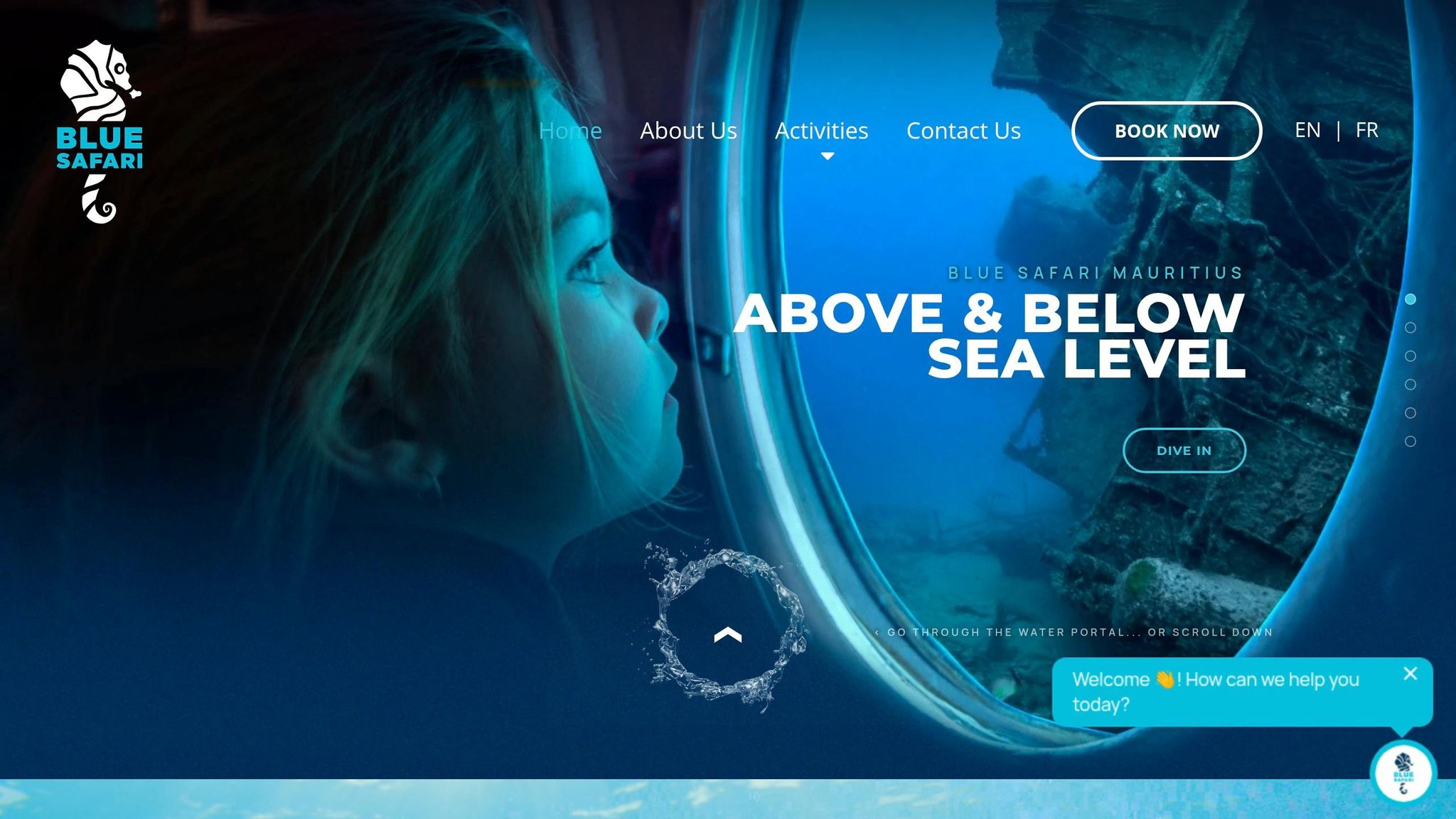
Blue Safari takes underwater exploration to a whole new level, offering experiences that go far beyond traditional snorkelling. Their activities open the door to Mauritius’ vibrant marine life, giving you a fresh perspective on the island’s underwater ecosystems.
Submarine Excursions: A Window to the Deep
Blue Safari operates the only leisure submarine in the Indian Ocean, offering a chance to explore depths that snorkelling simply can’t reach. The BS1100 submarine descends 35 metres below the surface, accommodating up to 10 passengers for a 40-minute journey through a world of coral reefs, the Star Hope shipwreck, and even a 17th-century sheet anchor. Each passenger gets their own porthole for uninterrupted views of the underwater scenery.
The submarine’s pressurised, air-conditioned cabin ensures you stay dry and comfortable – no swimming skills or diving equipment needed. Families are encouraged to join, with children as young as 2 welcomed aboard. Including transfers and a safety briefing, the entire experience lasts about 2 hours. Morning trips are recommended during peak seasons (December–February and July–August) for the clearest views and the most marine activity. Don’t forget your camera, but skip the flash to avoid reflections on the porthole glass.
If staying above water is more your style, Blue Safari offers equally engaging options with their coastal cruises.
Catamaran Cruises and Speedboat Adventures
Blue Safari’s catamarans are perfect for exploring Mauritius’ stunning coastlines, from the North and North-East to the South-East and West. These stable twin-hull vessels minimise rocking, making them ideal for families and photographers. They host between 18 and 37 passengers, complete with onboard BBQ lunches and beverages.
For a more personal outing, their speedboat tours offer an intimate way to discover hidden coves, remote snorkelling spots, and dolphin habitats along the West Coast. Boats like the Silver Dart and Blue Sensation carry up to 12 passengers, providing a more exclusive experience. Seasonal whale-watching trips, typically running from August to October, feature a 360-degree viewing deck for spotting these majestic creatures.
Tailored Marine Experiences
For fishing enthusiasts, the SportFisher fleet provides big game fishing trips, using both trolling and light tackle techniques backed by over 40 years of expertise. Dedicated dolphin-watching tours operate year-round, with early morning departures at 06:30 – the best time to see these playful creatures in action. Many of these tours also include snorkelling stops at Coin de Mire or Ile aux Bénitiers, giving you the chance to combine multiple activities in one trip.
Every experience can be customised to suit your preferences, whether you’re after encounters with exotic fish, a close look at marine mammals, or simply a peaceful exploration of Mauritius’ underwater paradise at your own pace.
Conclusion
Mauritius is home to an extraordinary underwater world. With over 430 species of marine creatures and 200 types of coral thriving in its pristine waters, the island’s reefs and lagoons offer unforgettable experiences for visitors. Whether it’s exploring the 800-year-old coral formations in Blue Bay Marine Park or uncovering 17th-century shipwrecks scattered across the seabed, each dive or snorkel reveals a fascinating blend of history and marine biodiversity.
What makes Mauritius stand out is how accessible this aquatic paradise is. From seasoned divers venturing into underwater caverns to families enjoying Blue Safari’s dry submarine rides at a depth of 35 metres, there’s something for everyone. Thanks to the natural barrier reef, the lagoons remain calm and protected, offering safe exploration opportunities throughout the year.
Protecting this vibrant ecosystem is key to ensuring its beauty endures. Small actions, such as using reef-safe sunscreen, avoiding contact with corals, and maintaining a respectful distance from marine life, go a long way in preserving habitats that have taken centuries to form. Opting for eco-conscious tour operators also supports the conservation of Mauritius’s 330 km of coastline and its marine inhabitants. Guided experiences, like those offered by Blue Safari, combine adventure with education, providing valuable insights into the underwater world.
Dive into Mauritius’ waters with care and let the wonders beneath the surface leave a lasting impression.
FAQs
Do I need to be able to swim to see marine life in Mauritius?
You don’t have to be a swimmer to appreciate the vibrant marine life in Mauritius. Options like boat tours or submarine excursions let you explore the underwater world without getting wet. That said, if you’re interested in snorkelling or diving, basic swimming skills are usually a must.
What should I bring for snorkelling in Mauritius?
For snorkelling in Mauritius, make sure you bring these must-haves:
- Reef-safe SPF 50+ sunscreen to shield your skin while protecting the marine ecosystem.
- A snug-fitting mask, a dry-top snorkel, and adjustable fins to ensure both comfort and safety in the water.
- A waterproof dry bag (10–20L) to keep your essentials like your phone or wallet safe and dry.
You might also want to consider packing a UV-protective rash guard, a wide-brim hat for extra sun protection, and reef shoes if you plan to explore rocky areas.
How can I spot turtles or dolphins without disturbing them?
To enjoy watching turtles or dolphins in Mauritius while respecting nature, it’s important to follow eco-tourism practices. The best time to spot dolphins is early in the morning, as they often come closer to the shore after feeding. Always keep a respectful distance – no touching or chasing – since this can cause unnecessary stress or harm to these animals. Choose licensed tour operators who adhere to ethical standards, ensuring that marine life and their habitats are disturbed as little as possible.