
- Reef-Safe Sunscreen: Protect your skin and marine life with mineral-based SPF 30–50+ sunscreen free of harmful chemicals like oxybenzone and octinoxate.
- UV-Protective Swim Shirt: A lightweight, long-sleeve rash guard with UPF 50+ saves you from constant sunscreen reapplication.
- Reef Shoes: Shield your feet from sharp coral, sea urchins, and rocky shores with sturdy, quick-dry water shoes.
- Snorkeling Gear: Bring your own mask, snorkel, and fins for a better fit, hygiene, and comfort while exploring underwater spots.
- Waterproof Dry Bag: Keep electronics, documents, and clothes safe from water and tropical rain.
- Quick-Dry Swimwear & Microfibre Towel: Pack two swimsuits and a compact towel for comfort and convenience.
- Wide-Brim Hat & Polarized Sunglasses: Protect your face, neck, and eyes from the sun’s harsh rays with breathable hats and glare-reducing glasses.
- Waterproof Phone Case or Action Camera: Capture underwater moments with reliable waterproof equipment.
- Reusable Water Bottle: Stay hydrated while reducing plastic waste with an insulated bottle.
- Lightweight Waterproof Jacket: Be ready for sudden tropical rain or cool sea breezes with a breathable, packable jacket.
Pro Tip: Mauritius’ weather can change quickly, and the marine environment is delicate. Choose eco-friendly products, avoid touching marine life, and rinse gear after saltwater exposure. Morning trips (November–February) offer calm waters and better visibility. With the right gear, your adventure will be unforgettable.
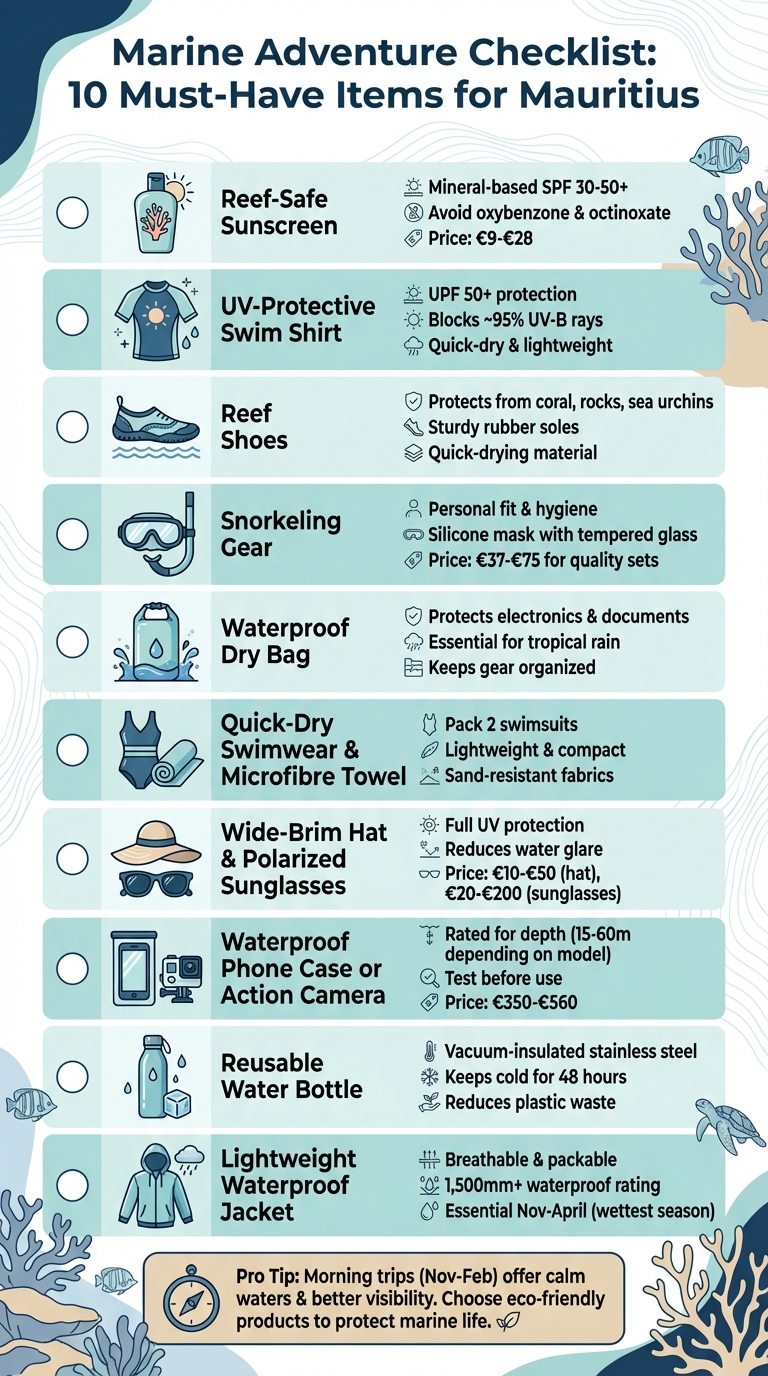
Marine Adventure Checklist: 10 Essential Items for Mauritius
1. Reef-Safe Sunscreen
Mauritius enjoys sunny skies year-round, but that intense tropical sun means high-SPF sunscreen is a must. However, not all sunscreens are safe for the environment. Many traditional sunscreens contain oxybenzone and octinoxate – chemicals known to harm coral reefs. Even tiny amounts, like 0.042 parts per million of oxybenzone, can stress and kill coral larvae. With an estimated 6,000 to 14,000 tonnes of sunscreen entering coral reef ecosystems every year, it’s clear why reef-safe sunscreen is crucial, especially when visiting marine treasures like Blue Bay Marine Park, a protected area since 1997.
To protect both your skin and the marine environment, opt for mineral-based sunscreens with non-nano zinc oxide or titanium dioxide. These ingredients reflect UV rays rather than absorbing into your skin or washing into the water. The "non-nano" label is important – particles larger than 100 nanometres ensure coral polyps can’t ingest them. As dermatologist Joshua Zeichner explains:
The term reef safe typically means that the sunscreen contains only mineral UV-blocking ingredients like zinc oxide and titanium dioxide.
For Mauritius’ warm climate, choose a broad-spectrum SPF 30–50+ sunscreen that’s labelled "Water Resistant 80 Minutes." Steer clear of misleading terms like "waterproof", and remember to reapply after swimming for consistent protection.
Watch out for greenwashing. Nearly half of sunscreens marketed as "reef-safe" still include harmful chemicals. Always check the label and avoid products containing oxybenzone, octinoxate, octocrylene, parabens, or triclosan.
Reef-safe sunscreens typically range from €9 to €28 per bottle. For added protection and to minimise chemical runoff, pair your sunscreen with a UV-protective swim shirt.
sbb-itb-3563db6
2. UV-Protective Swim Shirt
A long-sleeve rash guard with UPF 50+ protection is an essential item for your marine adventures in Mauritius. While reef-safe sunscreen is great for exposed areas, a UV-protective swim shirt offers consistent coverage, blocking about 95% of UV-B rays without the need for constant reapplication. It’s the perfect addition to your sun protection routine.
"It can be helpful to have a rash guard to protect from the sun when snorkelling or participating in other water sports." – Mautourco
This advice is especially practical in Mauritius. Unlike wetsuits, which can feel too warm for surface activities, a lightweight, quick-dry swim shirt keeps you protected without causing overheating. The tropical sun in Mauritius is intense – even on cloudy days – and when you’re snorkelling, your back is exposed to direct rays that reflect off the water.
3. Reef Shoes or Water Socks
The coastline of Mauritius is undeniably stunning, but beneath those crystal-clear waters lurk hidden dangers. Coral fragments, sharp rocks, and sea urchins can quickly ruin what was supposed to be a perfect day of snorkeling or beach exploration. That’s where reef shoes come in. These shoes act as a protective shield for your feet, making them essential for safely navigating the underwater world and rocky shores.
"A pair of water shoes will let you explore the lagoons worry-free." – Keith Crockford, The Bucket List Company
The benefits of reef shoes go beyond just comfort. While rare, stonefish – found in Mauritian waters – are highly venomous, and their stings can even be fatal. Although no shoe can guarantee full protection against these creatures (some travelers have reported stonefish spines piercing even thick soles), quality reef shoes still offer a crucial layer of defense. Look for shoes with sturdy rubber soles that provide excellent grip on slippery surfaces, whether you’re boarding a boat or stepping across mossy rocks.
For the best experience, choose shoes made from quick-drying materials that fit snugly without being too tight. This helps prevent sand from entering and keeps the shoes securely on your feet while swimming. Reef shoes aren’t just for the beach – they’re incredibly handy when trekking to waterfalls, hiking through lush rainforests, or enjoying catamaran trips. If you’re heading to Le Morne beach on the south coast, they’re especially useful; the exposed coral and coarse sand there can be tough on bare feet. Adding reef shoes to your packing list ensures you’re ready for all kinds of adventures.
To keep your shoes in good shape, rinse them with fresh water after each use and let them air-dry away from direct sunlight. And remember, wearing reef shoes doesn’t just protect your feet; it also helps you avoid accidentally harming the delicate marine ecosystems that make Mauritius such a magical destination.
4. Snorkeling Mask, Snorkel, and Fins
Although Blue Safari Mauritius supplies snorkeling equipment for their excursions, bringing your own gear can make a world of difference. Personal gear ensures a proper fit, better hygiene, and familiarity – key factors for enjoying Mauritius’ incredible marine spots like Blue Bay Marine Park or Trou aux Biches. When you’re comfortable, you’re free to fully immerse yourself in the underwater beauty.
Let’s start with the mask, arguably the most important piece of gear. Always opt for masks with silicone skirts rather than plastic ones. Silicone provides a better seal, lasts longer, and resists cracking over time. For the lenses, tempered glass is the way to go – it offers both clarity and safety. To check the fit, press the mask against your face without using the strap; if it stays in place when you inhale through your nose, you’re good to go. Before using your mask for the first time, clean the inside of the lens with toothpaste to remove any residue, then apply diluted baby shampoo or a reef-safe defogger to keep it from fogging up during your dive.
"A well-fitted mask saves you having to repeatedly clear it. It gives you the opportunity to focus on your surroundings instead." – Dive Spirit Mauritius
Once your mask is sorted, turn your attention to your snorkel. A good snorkel should include a dry-top valve to keep water out when you’re submerged and a purge valve at the bottom to make clearing water effortless. Avoid full-face snorkeling masks – they might seem convenient, but they come with serious risks like CO₂ buildup, difficulty in emergencies, and the inability to equalise pressure if you dive deeper.
Finally, let’s talk about fins, which are crucial for smooth swimming in Mauritius’ lagoons. Short "travel" fins are a great choice – they’re easy to pack and still provide enough thrust. For boat-based snorkeling, full-foot fins work perfectly. However, if you’re snorkeling in areas with rocky entries, such as Le Morne, open-heel fins paired with booties are a better option. Quality sets like the Cressi Palau Premium range from €55 to €75, while more budget-friendly options like the U.S. Divers Cozumel cost around €37 to €46.
Investing in your own snorkeling gear pays off quickly. A well-fitted mask and good-quality fins let you focus on the vibrant marine life of Mauritius, rather than struggling with ill-fitting or uncomfortable rental equipment.
5. Waterproof Dry Bag
A waterproof dry bag is a must-have for any marine adventure in Mauritius. It keeps your electronics – like cameras, GoPros, SD cards, portable power banks, and phones – safe from saltwater and protects important documents, such as passports, visas, dive cards, and insurance papers, from unexpected tropical rain showers.
Mauritius is known for sudden tropical downpours, making a dry bag essential. A quality dry bag ensures your items stay sealed and protected. Whether you need to separate a quick-dry towel and a change of clothes from wet swimwear or safeguard prescription medications and first-aid supplies from the island’s humidity, this bag has you covered.
When choosing a dry bag, look for one with enough space for your essentials, such as electronics, a lightweight waterproof jacket, and a microfibre towel. To stay organised, use ziplock bags for cables and accessories to avoid tangling. Store extra SD cards in a waterproof container for added protection. This way, no matter the activity, your gear stays dry and ready to use.
Whether you’re transferring between boats, whale watching, or snorkelling, a reliable dry bag ensures your essentials are safe, dry, and within easy reach.
6. Quick-Dry Swimwear and Microfibre Towel
Stay comfortable both in and out of the water by packing the right swimwear and towel. It’s a good idea to bring two quick-dry swimsuits, so you’ll always have a dry option for snorkelling or boat trips. Unlike traditional materials that can stay damp for hours, quick-dry fabrics shed water fast, helping you avoid discomfort, skin irritation, or feeling chilled between activities.
For towels, go with microfibre options. They’re super absorbent, lightweight, and dry much faster than bulky cotton towels. Plus, their compact size makes them easy to pack alongside essentials like your waterproof jacket or electronics.
To manage damp items, use a mesh or waterproof wet bag. This allows airflow while keeping other gear dry.
When choosing swimwear, consider styles that pair well with a UV-protective shirt and can double as a beach cover-up. Rolling your clothes is a smart packing trick – it saves space and helps reduce wrinkles.
One bonus of quick-dry fabrics? Many are sand-resistant, meaning less gritty mess in your bag or on the boat during catamaran tours or island-hopping trips. Whether you’re heading from the lagoon to a shaded terrace or diving into your next adventure, these essentials ensure you’re always comfortable and ready to go.
7. Wide-Brim Hat and Polarized Sunglasses
When you’re enjoying Mauritius’ sunny beaches, protecting your head and eyes is just as important as picking the right swimwear. The island’s tropical sun can be relentless, and a wide-brim hat offers much better protection than a standard cap. It shields not just your face but also your neck and shoulders from UV rays, which are even stronger when reflected off the water’s surface. In fact, the CDC recommends wide-brim styles for full coverage of vulnerable areas like the neck and face.
Look for hats made from light, breathable materials like cotton, linen, or moisture-wicking blends. These fabrics keep you cool in the humid climate while providing essential UV protection. Make sure the brim is wide enough to cover the back of your neck – an area that’s especially prone to sunburn during water activities.
Polarized sunglasses are another must-have. They cut down on glare from the water, making it easier to spot reefs and marine life from the boat. Opt for sunglasses that block both UVA and UVB rays, which is a key recommendation for tropical destinations.
To keep your gear secure, consider hats and sunglasses with straps. Adjustable chin straps or lanyards can prevent your hat or glasses from being swept away by coastal winds or sudden boat movements.
Keep in mind, the sun is at its strongest from November to April, and the shallow lagoons can amplify UV exposure throughout the day. With these essentials, you’ll be well-equipped to enjoy Mauritius’ stunning marine environment while staying protected.
8. Waterproof Phone Case or Action Camera
Exploring Mauritius’ vibrant underwater world calls for equipment that can handle the challenges of depth and pressure. Submarine excursions, like those offered by Blue Safari, descend to 35 metres, while underwater scooter rides typically stay between 3 and 4 metres deep. While many smartphones come with an IP68 rating – offering protection up to 1.5–6 metres for 30 minutes – this is insufficient for prolonged or deeper submersion [49,50]. To reliably capture your aquatic adventures, investing in the right waterproof gear is essential.
For hassle-free underwater photography, the OM System TG-7 is a solid choice. It’s waterproof up to 15 metres without needing additional housing and costs around €560. This camera is also built to endure tough conditions, including temperatures as low as –10°C and up to 100 kgf of force, making it perfect for snorkelling and shallow dives. If you prefer using your smartphone, consider professional-grade hard housings like the Divevolk SeaTouch 4 MAX (rated to 60 metres, approximately €350) or the SeaLife SportDiver (rated to 40 metres, also around €350). These cases provide dependable protection against water pressure [48,50]. To ensure your gear works flawlessly, always test it before your trip.
A quick dry test can save you from potential disasters: place a paper tissue inside the case, submerge it in a sink for 10–15 minutes, and check for leaks [46,47]. Don’t forget to bring spare batteries and high-capacity SD cards, as replacements in Mauritius can be pricey [38,40]. Also, keep in mind that the island uses a 230-volt power supply with British 3-pin (Type G) sockets, so pack the right adapter [4,40].
After any saltwater exposure, rinse your equipment with fresh water to prevent corrosion and salt deposits. A wrist strap or floating hand grip is a must – losing your phone or camera in deeper waters could result in permanent damage [47,50]. With the proper preparation and care, you’ll be ready to capture Mauritius’ stunning marine life without a hitch.
9. Reusable Water Bottle
Mauritius’ tropical heat, ranging from 25–32°C, makes staying hydrated a must. A reusable water bottle is not just practical for keeping cool but also plays a role in protecting marine ecosystems. Opt for a vacuum-insulated stainless steel bottle with a double-wall 304-grade design to keep your drinks cold for up to 48 hours – perfect for those long, sunny days by the beach or out exploring.
When choosing a bottle, look for features like a leak-proof design, a secure twist-on or screw lid, and a wide-mouth opening for easy filling and adding ice. Materials should be BPA-free, and extras like a built-in carry loop or carabiner can make it more convenient during outdoor activities. A great example is the Flashbay Adventure Bottle, which has earned a stellar 4.9/5 Trustpilot rating from over 150,000 reviews – proof of its reliability and quality.
Using a reusable bottle also has a positive impact on the environment. It helps cut down on single-use plastics, which are a major threat to marine life. By 2025, plastic debris in Asia-Pacific coral reefs is projected to surpass 15.7 billion pieces. This pollution has already harmed over 800 marine and coastal species through ingestion, entanglement, and habitat destruction. As JJ Harvey, Director at Reef-World, explains:
Small steps can make a big difference and so we encourage people to be mindful of their plastic consumption and the steps they can take to minimise pollution. If we all play our part, coral reefs and marine life can continue to thrive.
To keep your bottle in top shape, hand wash it to maintain the vacuum seal and rinse it thoroughly after exposure to saltwater. And if you come across plastic waste during your adventures, dispose of it properly – it’s a small action that can help protect our oceans.
10. Lightweight Waterproof Jacket
In addition to essentials like reef-safe sunscreen and quick-dry swimwear, a lightweight waterproof jacket is a must-have for Mauritius’ unpredictable weather. The island often experiences sudden, heavy rain, particularly from November to April. February, for instance, sees an average of 253 mm of rainfall, making it the wettest month of the year. These tropical downpours are usually brief but intense, so having a lightweight waterproof jacket on hand ensures you stay dry when the skies open up.
This jacket proves even more useful during boat trips, such as catamaran cruises. While daytime temperatures hover between 26°C and 30°C, the combination of sea spray and cool winds can leave you feeling chilled once you’re out on the water. A windproof, water-resistant layer offers essential protection, keeping you comfortable throughout your adventure.
Given Mauritius’ humid climate, it’s important to pick a jacket that combines waterproofing with breathability to avoid overheating. Jackets made with microporous fabrics, sealed seams, and waterproof zippers are ideal. High-performance membranes, which feature over nine billion pores per square inch (about 1.4 billion pores per square centimetre), are designed to block rain while allowing sweat vapour to escape.
Opt for a packable design that easily fits into your daypack or waterproof dry bag. Features like an adjustable hood, quick-dry materials, and lightweight construction make the jacket versatile for both marine outings and inland activities. When choosing a jacket, check the waterproof rating – fabrics that can withstand a water column of 1,500 mm without leaking are considered waterproof.
To maintain performance, if water starts pooling on the jacket’s surface, restore its DWR (durable water repellent) coating by machine washing and tumble drying, following the care instructions. This simple upkeep ensures your jacket stays effective throughout your trip, making it an indispensable part of your travel kit.
Conclusion
Planning a marine adventure in Mauritius requires attention to detail and the right equipment. Essentials like reef-safe sunscreen help protect the island’s fragile coral reefs, while a dependable waterproof jacket prepares you for those sudden tropical downpours. Each item on your checklist not only ensures your safety but also helps safeguard the island’s stunning natural surroundings. Remember to respect the ocean by avoiding direct contact with marine life or taking anything from the sea.
A well-prepared checklist does more than just keep you organized – it also demonstrates care for the environment. It helps prevent common mishaps, such as forgetting an SD card for your camera, bringing an ill-fitting snorkel mask, or missing important documents like the MSDA form. Thoughtful planning reflects a commitment to preserving Mauritius’s unique ecosystems.
If you’re looking for guided underwater excursions, Blue Safari Mauritius offers submarine tours that highlight the island’s marine life and reef systems. Whether you prefer snorkeling, catamaran cruises, or deep-sea adventures, these activities take you to the most vibrant underwater locations while following strict environmental standards.
Once your gear is set and you’ve reviewed the environmental guidelines, timing becomes key. Morning trips are ideal for calm waters and clear visibility, especially during Mauritius’s peak season from November to February. By preparing thoroughly, you’ll set the stage for an unforgettable journey.
FAQs
Why is it important to use reef-safe sunscreen during a marine adventure?
Using reef-safe sunscreen is a smart way to protect marine ecosystems while enjoying your time in the water. Many traditional sunscreens contain chemicals like oxybenzone and octinoxate, which are known to harm coral reefs by triggering bleaching and interfering with their natural growth. Reef-safe alternatives use ingredients that are less harmful to the environment, helping to safeguard these vibrant underwater habitats.
When you choose reef-safe sunscreen, you’re not just protecting your skin – you’re also playing a part in conserving Mauritius’ breathtaking coral reefs. It’s a simple choice that can have a lasting impact on the health of our planet’s oceans.
How can I find snorkeling gear that fits comfortably and works well?
Finding the right snorkeling gear can make all the difference in your underwater experience. Start with a mask that fits snugly and creates a proper seal on your face. To check the fit, place the mask on your face without using the strap and gently inhale through your nose – if it stays in place without any air leaking, it’s a good match. Opt for masks with adjustable straps and tempered glass lenses to ensure both comfort and durability.
When it comes to the snorkel, look for one with a comfortable, secure mouthpiece. A dry-top snorkel is a great feature to consider, as it helps keep water out, making your time in the water more enjoyable. Testing your gear before heading out ensures a smooth and hassle-free snorkeling adventure.
Why do you need a lightweight waterproof jacket for marine adventures in Mauritius?
When exploring Mauritius, a lightweight waterproof jacket is an essential item, especially for marine adventures. The island’s tropical climate is known for its sudden rain showers and high humidity, particularly in the summer months. Weather conditions can shift unexpectedly, and a waterproof jacket ensures you stay dry and comfortable whether you’re snorkeling, taking a boat trip, or wandering along the stunning coastline.
Beyond rain protection, these jackets are perfect for marine settings. They shield you from splashes and sea spray, keeping you dry while you’re out on the water. Thanks to their lightweight design, they’re easy to pack and don’t take up much space in your luggage. Whether you’re lounging on a sunny beach or navigating the open sea, having a waterproof jacket means you’re ready for Mauritius’s unpredictable weather, letting you enjoy your activities without discomfort.