
Want to snorkel in Mauritius without harming its marine life? Here’s how you can enjoy the island’s stunning reefs while keeping them safe for future generations:
- Use reef-safe sunscreen: Regular sunscreen harms coral. Opt for mineral-based, reef-friendly options.
- Avoid touching coral or marine life: Corals are fragile living organisms. Keep your distance to protect both them and yourself.
- Snorkel in protected marine areas: Places like Blue Bay Marine Park have rules to safeguard ecosystems. Choose these spots for a safer, regulated experience.
- Bring your own gear: Using eco-friendly equipment and practicing proper techniques minimizes your impact.
- Choose conservation-focused operators: Support tours that prioritize marine protection and follow strict guidelines.
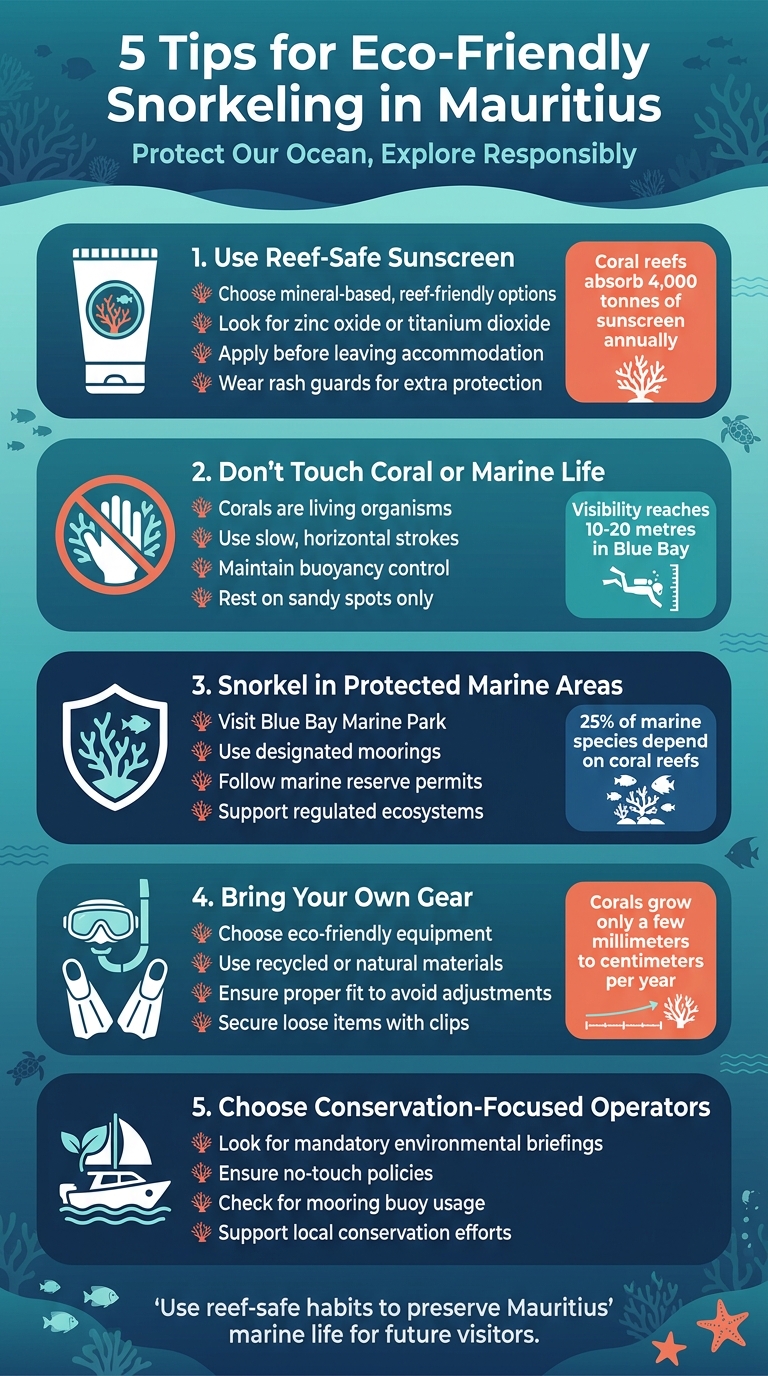
5 Essential Tips for Eco-Friendly Snorkeling in Mauritius
1. Use Reef-Safe Sunscreen
Protecting Mauritius’ Reefs
The chemicals in traditional sunscreens can wreak havoc on coral reefs, contributing to their decline. In Mauritius, where reefs already face challenges like climate change, bleaching, and human activity, choosing reef-safe sunscreen is a small yet meaningful way to help protect these delicate ecosystems.
Simple Steps for Snorkellers
To minimize sunscreen runoff into the lagoon, apply it well before leaving your accommodation, giving it time to absorb into your skin. For extra protection against UV rays and to reduce the need for sunscreen while snorkelling, consider wearing a rash guard. When selecting sunscreen, look for labels indicating "reef-safe" or "coral-safe" to ensure it doesn’t contain harmful chemicals. This is especially important when visiting protected areas like Blue Bay Marine Park, where marine life thrives under careful conservation efforts. By taking these steps, you contribute to preserving Mauritius’ vibrant underwater world for future generations.
sbb-itb-3563db6
2. Don’t Touch Coral or Marine Life
Protecting Marine Life
Corals aren’t just underwater decorations – they’re living organisms. Even a gentle touch can harm or kill fragile coral polyps, which are already under strain from climate change and bleaching. In places like Blue Bay Marine Park, there are strict rules against touching coral or marine animals, as well as collecting shells as souvenirs. These rules exist for a reason: every interaction with the reef adds stress to an ecosystem already fighting to survive. Being mindful of this helps set the tone for responsible snorkelling.
"Mauritius’ reefs face pressure from climate change, bleaching, and human activity. Travellers play a key role in reducing damage." – Valeriya Ivanova, Author
Adopting Responsible Practices
When snorkelling, it’s essential to control your movements to avoid accidental contact with the reef. Use slow, steady, horizontal strokes to maintain buoyancy and keep your fins clear of the coral. If you need to rest, find a sandy spot to stand or rely on your life jacket for support instead of standing on the reef. These small changes in behaviour can make a big difference in preserving the natural balance of Mauritius’ marine life.
Improving Snorkelling Safety and Experience
Avoiding contact with marine life isn’t just about protecting the reef – it’s also about keeping yourself safe. Coral can cause sharp cuts, and creatures like sea urchins or jellyfish can deliver painful stings. Luckily, with visibility often reaching 10–20 metres on calm days in areas like Blue Bay, there’s no need to get too close to enjoy the stunning underwater views. Staying at a respectful distance safeguards both the environment and your own well-being. Always listen carefully to your guide’s safety instructions before heading into the water. Respect for marine life, paired with proper snorkelling techniques, is key to an eco-friendly and enjoyable experience in Mauritius.
3. Snorkel in Protected Marine Areas
Reducing Environmental Impact
Opting to snorkel in protected marine zones is an important way to safeguard Mauritius’ underwater ecosystems. Take Blue Bay Marine Park, for example – this area uses designated moorings to prevent boat anchors from harming coral reefs, a common issue in unregulated waters. Access to such areas is controlled through marine reserve permits, which help limit visitor numbers and reduce stress on these delicate environments. By choosing to snorkel in these protected lagoons, you’re actively contributing to conservation efforts that ensure the reefs remain vibrant and thriving for generations to come.
Protecting Marine Life
Marine parks play a vital role in preserving habitats like coral gardens and seagrass beds, which are essential for species such as dugongs and juvenile fish. Blue Bay Marine Park, in particular, is a haven for a variety of marine life, including parrotfish, surgeonfish, and sea turtles, thanks to its mix of reef and seagrass habitats. These zones enforce strict rules against collecting shells, touching coral, or disturbing wildlife, ensuring that the reef’s ecosystem remains intact. Beyond protecting biodiversity, these areas also benefit nearby fisheries, creating a ripple effect that supports the broader marine ecosystem.
Improving Snorkelling Safety and Experience
Protected areas don’t just benefit the environment – they also make snorkelling safer and more enjoyable. These zones are often located in calm, shallow lagoons with excellent visibility. In Blue Bay, for example, clear days can offer visibility of up to 10–20 metres. Popular snorkelling hubs like Mahebourg provide marked swimming zones and lifeguards, making them especially suitable for beginners. Guided eco-snorkel tours, led by certified professionals, not only enhance your knowledge of the marine ecosystem but also ensure you adhere to conservation guidelines. For the best experience, aim for morning sessions when the sea is calm and visibility is at its peak.
Adopting Responsible Practices
Many protected marine areas include educational signage and eco-guides run by local communities to encourage responsible snorkelling. Before visiting, check whether a small conservation fee or permit is required – these contributions go directly towards protecting reefs and supporting habitat restoration efforts. If you’re on a private boat, always make use of designated moorings or anchor in sandy areas to avoid damaging coral. Pay close attention to your guide’s instructions regarding marine park regulations, hand signals, and proper entry and exit points to ensure a safe and eco-friendly snorkelling adventure.
4. Bring Your Own Gear and Use Proper Techniques
Bringing your own snorkelling gear and practicing the right techniques can significantly lower your environmental impact while enhancing your overall experience.
Reducing Environmental Impact
When you use your own snorkelling gear, you not only minimise rental waste but also have the chance to choose eco-friendly options. For example, fins made from recycled plastics or natural rubber are better for the environment. Pair this with wearing UPF clothing, like long-sleeved rash guards, to reduce the need for sunscreen, which can harm marine ecosystems. Coral reefs absorb an estimated 4,000 tonnes of sunscreen annually, and since corals grow only a few millimetres to a couple of centimetres each year, even small amounts of chemical exposure can cause severe damage. These choices align perfectly with broader eco-conscious practices.
Improving Snorkelling Safety and Experience
Using well-fitted masks and fins helps you avoid unnecessary underwater adjustments that could lead to accidental coral contact. Before visiting places like Blue Bay Marine Park, test your gear in calm waters to ensure it’s comfortable. A flotation device can also help you maintain buoyancy, reducing the risk of pressing against fragile coral. With water visibility in Blue Bay often reaching 10–20 metres on clear days, you’ll have an excellent view of the underwater world, making it easier to avoid sensitive areas.
Adopting Responsible Practices
Using proper techniques is just as important as having the right gear. Slow, controlled fin movements are essential when navigating shallow coral gardens, as even one careless kick can destroy years of coral growth. Secure loose items like cameras or gauges with clips or lanyards to prevent them from dragging across delicate reef structures. If sunscreen is necessary, opt for mineral-based products containing non-nano zinc oxide or titanium dioxide to protect the reef. You could also bring a small mesh bag to pick up any floating debris you encounter. Since 25% of marine species depend on coral reefs, every mindful action you take contributes to preserving this critical ecosystem.
5. Choose Conservation-Focused Operators
When it comes to snorkeling responsibly, picking an operator that prioritizes conservation is just as important as using reef-safe sunscreen or handling marine life with care.
Protecting Marine Life
Look for operators dedicated to protecting marine ecosystems. These operators typically provide mandatory safety and environmental briefings before each tour. These sessions detail how to use gear properly, communicate with hand signals, and respect marine park regulations, including strict no-touch policies.
During snorkeling trips, responsible guides stay in the water with guests, pointing out fascinating species like parrotfish and sea turtles while ensuring the reef remains untouched. Additionally, they use mooring buoys or anchor only in sandy areas to avoid harming fragile coral ecosystems. Such measures play a key role in safeguarding marine biodiversity for future generations.
Adopting Responsible Practices
To ensure you’re supporting the right kind of operator, check if their fees cover marine park permits. Also, see if they encourage eco-friendly practices, like providing reef-safe sunscreen or promoting the use of rash guards. Responsible operators should also have waste management protocols in place for their boats.
Choosing local operators who actively participate in conservation efforts can make a big difference. For example, at Blue Bay Marine Park, supporting businesses like Blue Safari Mauritius means your snorkeling adventure also contributes to preserving Mauritius’s stunning marine heritage.
Conclusion
To wrap up, here are key eco-friendly snorkelling practices:
- Use reef-safe sunscreen to protect marine life from harmful chemicals.
- Avoid touching coral or marine creatures to prevent damage.
- Snorkel in protected areas where ecosystems are managed and safeguarded.
- Bring your own gear and ensure you follow proper snorkelling techniques.
- Choose operators focused on conservation to support local protection efforts.
Mauritius’ coral reefs are under immense strain from climate change, coral bleaching, and human activity. Every snorkeller’s actions play a role in their survival. Simple habits like using reef-safe sunscreen, avoiding contact with coral, and respecting marine life can make a big difference in preserving these fragile ecosystems for future generations.
"Use reef‐safe habits to preserve Mauritius’ marine life for future visitors."
This quote captures the spirit of responsible snorkelling. Protected areas like Blue Bay Marine Park regulate human activity to minimise harm, requiring permits and enforcing strict conservation measures. Operators such as Blue Safari Mauritius are excellent examples, as they prioritise environmental education, enforce no-touch policies, and use mooring systems to prevent anchor damage to reefs.
FAQs
What ingredients should I avoid in sunscreen for Mauritius reefs?
When choosing sunscreen, steer clear of chemical ingredients such as oxybenzone, octinoxate, octocrylene, avobenzone, homosalate, octisalate, dioxybenzone, and benzophenone-1. These chemicals pose a serious threat to marine life and coral reefs. Instead, go for reef-safe sunscreens to help preserve Mauritius’ fragile underwater ecosystems. Protecting the ocean starts with small, conscious choices like this.
Do I need a permit to snorkel in Blue Bay Marine Park?
No, you don’t need a permit to snorkel at Blue Bay Marine Park. That said, if you want to visit the core protected zones, you’ll need to join a guided boat tour. This rule helps safeguard the marine ecosystem and ensures its preservation.
How can I improve buoyancy to avoid kicking coral?
To enhance your buoyancy and steer clear of damaging coral, it’s essential to focus on your body positioning in the water. Keep your posture horizontal and stay relaxed – this helps you move efficiently. Practice slow, controlled movements with your fins to avoid unnecessary splashing or accidental contact with coral.
Using a properly fitted snorkel and mask can make a big difference, as it helps you stay streamlined. Additionally, steady breathing through your snorkel not only keeps you calm but also naturally supports your buoyancy, allowing you to float comfortably at a safe distance from delicate reef ecosystems.